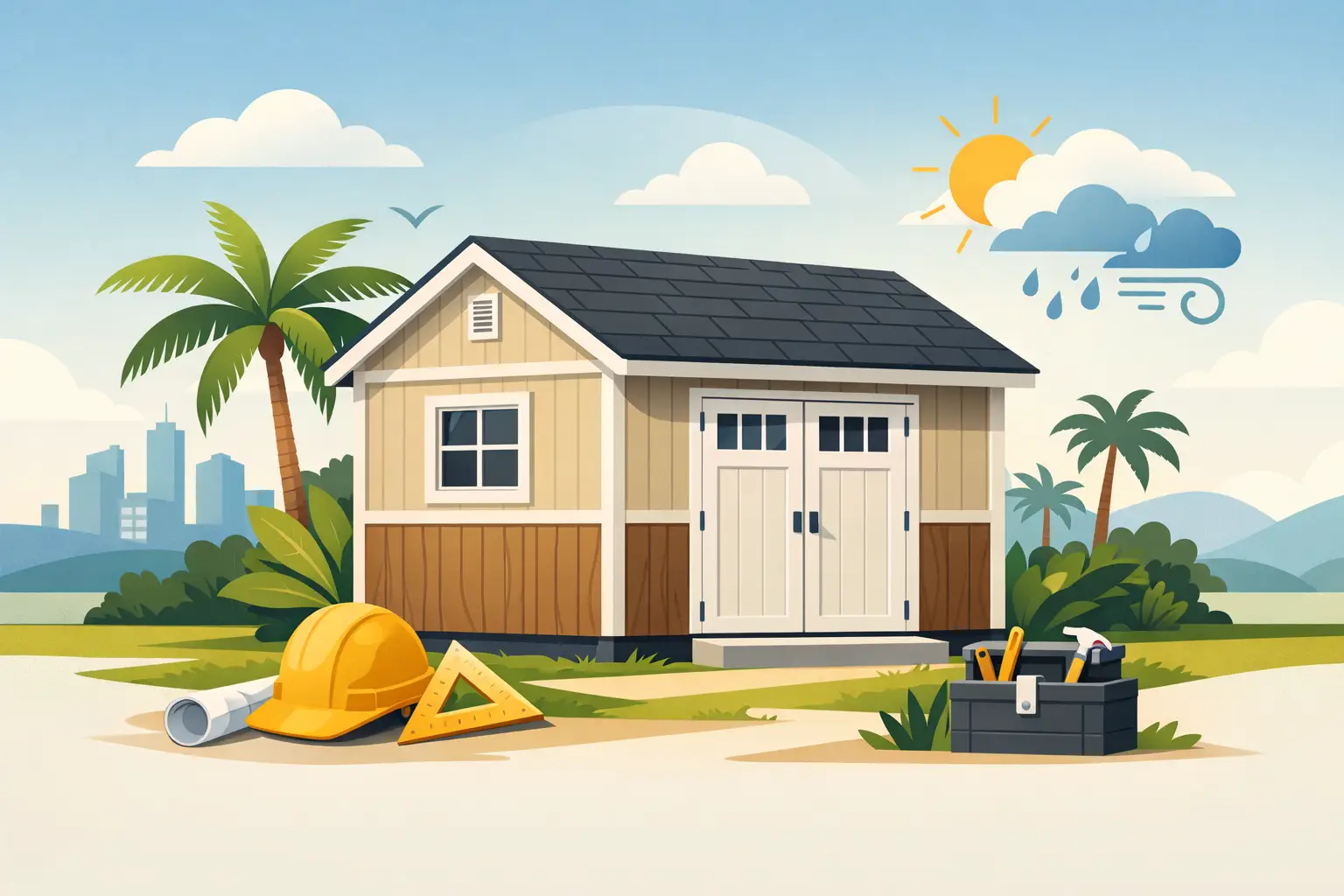
Florida Code Compliant Sheds That Last
A shed can look solid in a brochure and still be wrong for a Florida property. That usually shows up later – during permit review, after the first hard storm, or when the building starts holding moisture and wearing out faster than expected. If you are shopping for florida code compliant sheds, the real question is not just size or price. It is whether the structure is designed, built, and installed for Florida conditions from the ground up.
That matters more on the Gulf Coast than almost anywhere else. Heat, humidity, heavy rain, soft or shifting soils, and high wind exposure put real pressure on small buildings. A shed is not just a backyard box. It is a structure that has to work with local codes, the site it sits on, and the way you plan to use it for years.
What makes florida code compliant sheds different
In Florida, code compliance is not a marketing phrase. It affects how a shed is anchored, framed, roofed, and permitted. It can also affect where the building can be placed on your lot, how close it can sit to property lines, and whether extra engineering or site prep is required.
A code compliant shed is built to meet applicable state and local requirements, but that does not mean every shed is built the same way. One property may need a different foundation approach than another. A coastal or exposed site may demand more attention to wind loads than a sheltered inland yard. If the shed will store lawn tools, the design needs may be simple. If it will house business equipment, serve as a workshop, or support electrical service, the planning becomes more detailed.
This is where many buyers get tripped up. They compare sheds by square footage and sticker price, when the bigger difference is often in what is behind the walls and under the floor.
Why on-site construction often makes more sense in Florida
Delivered prefab sheds can work in some cases, but they also come with limits. The building has to be transported, which affects how it is built and how large it can be. Delivery access can be a problem on fenced lots, narrow driveways, soft ground, or properties with trees, grade changes, or tight setbacks.
With on-site construction, the shed can be built to fit the actual property instead of forcing the property to fit the building. That gives more control over footprint, elevation, door placement, roof design, and anchoring. It also makes it easier to account for local code requirements and site-specific conditions before the project gets too far down the road.
For many Florida property owners, that is the smarter path. It allows the structure to be built where it belongs, how it needs to be built, and with fewer compromises tied to transport.
The parts of shed compliance that matter most
Wind resistance and anchoring
Florida weather is the first thing most people think about, and for good reason. High winds are not a rare event here. A shed needs more than a decent-looking exterior. It needs a structural system that is planned for uplift, lateral forces, and secure attachment to its base.
Anchoring is one of the biggest factors. If a shed is not anchored correctly for the site and local code requirements, it may be vulnerable when strong weather rolls in. The roof system matters too. The connection points between roof, wall, and foundation are where quality construction shows up.
Roofing and water management
A shed roof in Florida takes a beating from sun, rain, and wind-driven weather. Code compliance matters, but good judgment matters too. The right roofing materials, proper fastening, and attention to runoff all affect how long the building performs.
A cheap roof can become an expensive problem if it starts leaking into stored equipment, tools, or inventory. Water intrusion also leads to mold, rot, and shortened building life, especially in a humid climate.
Site placement and setbacks
A well-built shed still has to be placed correctly. Local rules may affect setbacks from property lines, easements, septic areas, utility access, and other structures. That is one reason a free on-site consultation is valuable. Paper plans alone do not always show the real constraints of a lot.
Placement also affects drainage and long-term use. A low spot in the yard may seem convenient until standing water collects around the building after every heavy rain.
Intended use
Not every shed is just storage. Some customers need a hobby space, a workshop, lawn equipment building, office overflow, or a place to protect tools for a small business. The more demanding the use, the more the design details matter.
Electrical needs, ventilation, door size, shelving support, insulation options, and floor load capacity can all come into play. A shed built for light seasonal storage is not necessarily the same shed you want for daily work use.
How to judge a builder, not just a building
When people search for florida code compliant sheds, they are often really looking for a contractor they can trust. That is the bigger decision.
Start with licensing and local experience. Florida is not a place to take chances on someone who builds by habit instead of by code. You want a builder who understands permit requirements, wind considerations, roofing standards, and how to adapt a structure to your actual site.
Then look at the construction approach. Ask whether the building is delivered or built on site. Ask how customization is handled. Ask what changes can be made for access, drainage, use, and appearance. A reliable contractor should be able to explain not just what they build, but why they build it that way.
It also helps to pay attention to how the conversation goes. If the builder is focused only on quick pricing, that is a red flag. A better process starts with questions about your property, what you are storing, where the building will sit, and what problems the structure needs to solve.
Custom sheds are not about extras for the sake of extras
There is a difference between custom work and unnecessary upselling. For Florida property owners, customization is often what makes the shed practical and durable.
The right door layout can make equipment easier to move. Matching rooflines and siding can help the shed look like it belongs on the property instead of feeling like an afterthought. Adjusting the size by even a few feet may improve access, storage efficiency, or code placement.
Custom does not always mean complicated. It means the structure is built around real use and local conditions instead of a one-size-fits-all model.
That is especially important if the shed needs to work alongside other exterior projects, like a carport, garage, deck, fence, or covered area. Property owners often get better long-term results when these structures are planned with the full site in mind instead of as separate afterthoughts.
The cost question buyers should ask differently
Everyone wants a fair price. That makes sense. But the cheapest shed is often the most expensive one over time if it leads to permit trouble, storm damage, poor drainage, or replacement work years earlier than expected.
A better question is this: what are you paying for? With a quality shed, you are paying for site-fit construction, code awareness, better materials, stronger installation, and a building that holds up under Florida weather. You are also paying for fewer surprises.
There are trade-offs, of course. A fully custom on-site shed may cost more upfront than a mass-produced delivered unit. But for many homeowners and small business owners, that higher initial investment buys better performance, better fit, and more confidence in the finished structure.
Florida code compliant sheds should solve a problem
The best shed projects start with a practical need. Maybe your garage is overloaded. Maybe your lawn equipment is exposed. Maybe your business needs secure overflow storage, or your property needs a work space that keeps tools dry and organized.
Once that need is clear, the right build becomes easier to define. Size matters, but so do the details that affect daily use: where the doors swing, whether the floor can handle heavy equipment, how the roof sheds water, and how the structure stands up when weather turns rough.
That is the kind of work Tool Time Buildings is built around – solving real property problems with durable outdoor structures that are designed for the site, built on site, and handled by licensed professionals who understand what Florida demands.
If you are comparing shed options, slow the process down just enough to ask better questions. A shed should do more than fill empty space in the yard. It should fit the property, meet the code, hold up to the weather, and give you one less thing to worry about when the next storm season arrives.