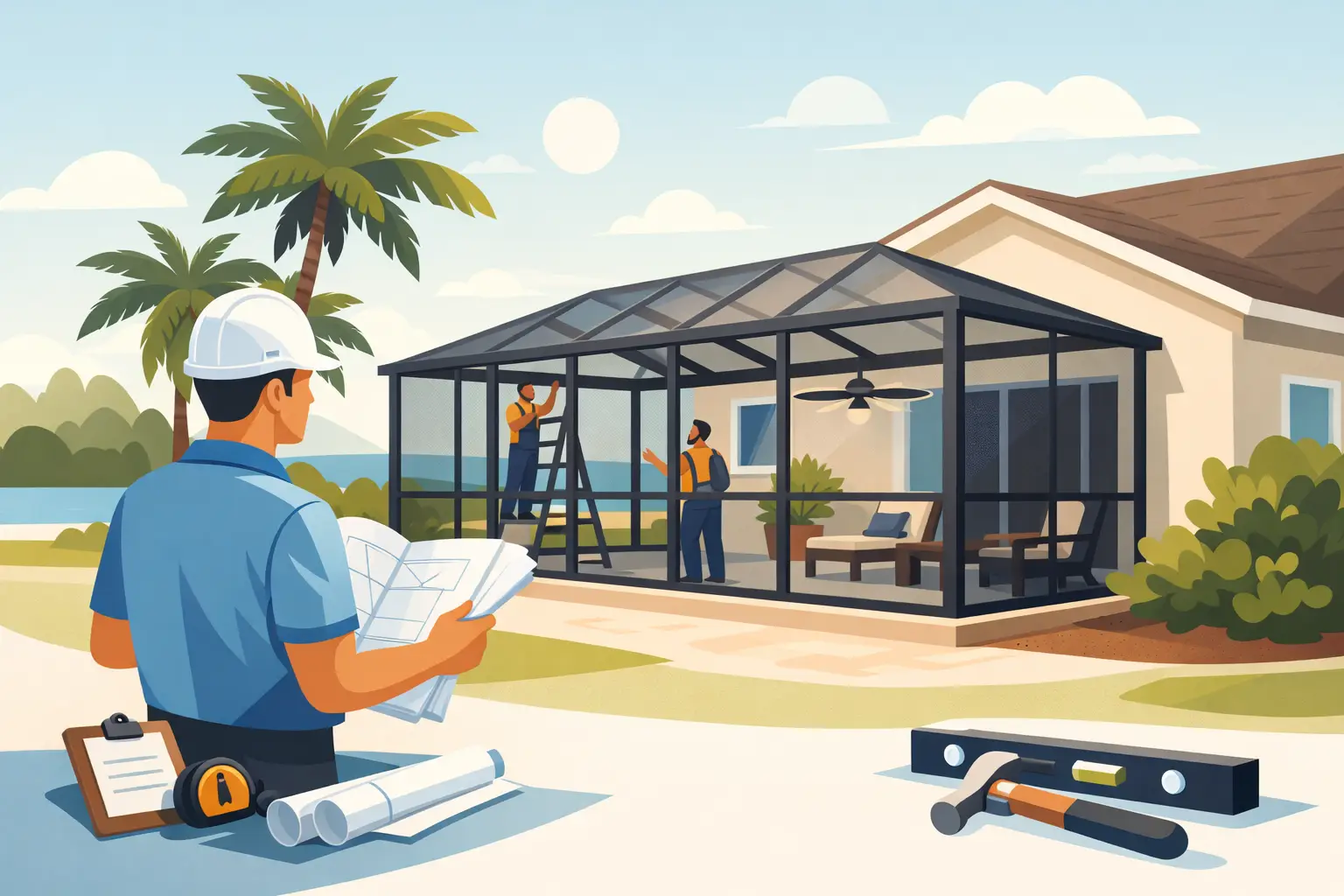
Choosing a Screen Room Builder Florida Trusts
A screen room sounds simple until you build one in Florida. The minute you add wind, rain, salt air, insects, code requirements, and the way your house actually sits on the lot, the difference between a basic add-on and a well-built structure gets obvious fast. If you’re looking for a screen room builder Florida property owners can rely on, it helps to know what separates a dependable contractor from someone selling a quick enclosure.
For most homeowners, the goal is straightforward. You want usable outdoor space without the constant battle against mosquitoes, glaring sun, and sudden weather changes. But in the Florida Panhandle, a screen room also has to hold up over time, fit your property correctly, and make sense with the rest of your home.
What a good screen room should actually do
A screen room should give you more than shade and bug protection. It should create a space you use regularly, not just something that looks good for a few months and then starts showing problems. That means the roof tie-in matters, drainage matters, framing matters, and how the room handles wind matters.
A lot of property owners start with the idea that all screen rooms are basically the same. They are not. Some are little more than light-framed enclosures added with minimal planning. Others are built as real, lasting exterior structures designed around the house, the slab or deck, and local weather conditions. That difference affects how long the room lasts, how solid it feels, and whether it adds value or creates headaches later.
If you plan to use the space for outdoor dining, a quiet sitting area, poolside shade, or a protected transition between your backyard and home, the details matter from day one.
Why choosing a screen room builder in Florida is different
Florida is not an easy place to build carelessly. Screen rooms here deal with intense humidity, hard rain, high UV exposure, and storm season every year. In coastal and near-coastal areas, salt air can also speed up wear on the wrong materials.
That is why choosing a screen room builder in Florida should never come down to price alone. A low quote can leave out the things that matter most, like proper anchoring, correct roof design, code compliance, or materials that stand up better in this climate. You may save money at the start and spend more fixing sagging screens, water issues, or structural problems later.
An experienced local contractor knows how these projects perform in real conditions. In places like Panama City, Panama City Beach, and the surrounding Bay County area, you need someone who understands wind exposure, drainage concerns, and how to build for a property that may already have grade changes, older concrete, or site-specific constraints.
Built on-site usually gives you a better result
One of the biggest differences between a quality contractor and a one-size-fits-all seller is how the project is built. A screen room built on-site can be tailored to the exact dimensions of your home and yard. That means better fit, cleaner lines, and fewer compromises.
This matters more than many people realize. Homes are rarely as uniform as brochure drawings suggest. Roof lines vary. Existing patios may be slightly out of square. Drainage slopes may need to be worked around. Utility access, doors, windows, and walkways all influence the final layout.
When a contractor builds on-site, there is room to adjust for those realities rather than forcing your property to fit a preplanned package. The result is usually stronger, better looking, and more practical to live with.
What to ask a screen room builder before you hire them
You do not need to be a contractor to ask smart questions. In fact, a good builder should be comfortable answering them clearly.
Start with licensing and experience. If a company is working on exterior structures in Florida, they should be able to explain what licenses apply and how they handle code requirements. Ask whether they build for local wind load standards and whether permits are handled as part of the job.
Then ask how the structure will connect to your home or existing slab. That answer tells you a lot. A professional builder should be able to explain the framing approach, roof integration, anchoring, and any limitations with the current site.
It also helps to ask what customization is available. Not every property owner needs the same thing. Some want an open, airy enclosure for a patio. Others want a more substantial room with insulated roof options, ceiling fans, lighting, wider access, or integrated deck and awning work. A builder who only offers one setup may not be the right fit if your property needs something more specific.
Finally, ask how they account for Florida weather. If the answer stays vague, keep looking.
Design choices that affect long-term value
A screen room is not just a rectangle with mesh. The roof style, framing material, screen type, entry points, and size all shape how useful the space will be.
Roof design is one of the biggest decisions. An insulated roof can make the room more comfortable during hot months, while an open or lighter roof system may cost less up front. Neither is automatically right or wrong. It depends on how often you plan to use the space, how much sun the area gets, and whether comfort or budget is the bigger priority.
Screen choice matters too. Some screen products prioritize visibility. Others are better for insect control or durability. If your property gets a lot of direct sun, nearby tree debris, or heavy use from kids and pets, that should influence the recommendation.
Size is another area where bigger is not always better. A room should fit the house and the way you actually live. If it blocks light into the home or overwhelms the backyard, it can feel like a mistake even if the workmanship is fine. Good design is practical. It solves a problem without creating a new one.
Permits, codes, and storm-minded construction
This is the part many online articles skip, but it matters in real life. A screen room is an exterior structure, and in Florida that means permits, codes, and construction standards are part of the conversation.
A qualified contractor should know what the local jurisdiction requires and build accordingly. That includes structural considerations, attachment methods, and roofing details. If a builder treats permitting like an inconvenience instead of a normal part of the process, that is a warning sign.
Storm-minded construction is not just marketing language in the Panhandle. It is part of building responsibly. With over 20 years serving this region, veteran-owned companies like Tool Time Buildings understand that a structure has to be planned for the weather we actually get, not ideal conditions on paper.
That local experience helps when a site presents challenges. Maybe the existing patio is not suitable as-is. Maybe runoff from the roof needs to be redirected. Maybe the room has to align with a carport, deck, or future addition. Those are the kinds of issues that are easier to solve when the builder has worked on Northwest Florida properties for years.
Cost matters, but value matters more
Every property owner has a budget. That is real, and any honest contractor should respect it. But the best value is not always the lowest number on the estimate.
A properly built screen room may cost more than a stripped-down alternative because it includes stronger materials, better site prep, permit compliance, and a design that fits your home. Those things are not extras. They are often the reason the structure still performs well years later.
At the same time, not every project needs the most upgraded version. Sometimes a straightforward, well-built room is the right answer. Sometimes adding features like improved roofing, integrated lighting, or a larger footprint makes sense because it changes how often the room gets used. It depends on your home, your goals, and how long you plan to stay there.
If financing is available, that can also make it easier to build the room you actually want instead of settling for one that falls short.
Who benefits most from a custom screen room
The best candidates are usually homeowners who already enjoy their outdoor space but want to use it more often and with less hassle. That might mean a back patio that is too exposed to insects, a sitting area that gets too much afternoon sun, or a yard where you want covered space without fully enclosing it into a sunroom.
Small business owners and property owners can benefit too, especially when a screened area improves comfort for customers, tenants, or family use. The key is matching the structure to the site instead of forcing a standard design where it does not belong.
A custom build makes the most sense when you care about fit, appearance, and durability. That is especially true in Florida, where weather finds weak spots quickly.
The right screen room should feel like it was always supposed to be there. If you are talking with a builder who listens to how you use your property, explains the construction clearly, and plans for Florida conditions from the start, you are probably on the right track.
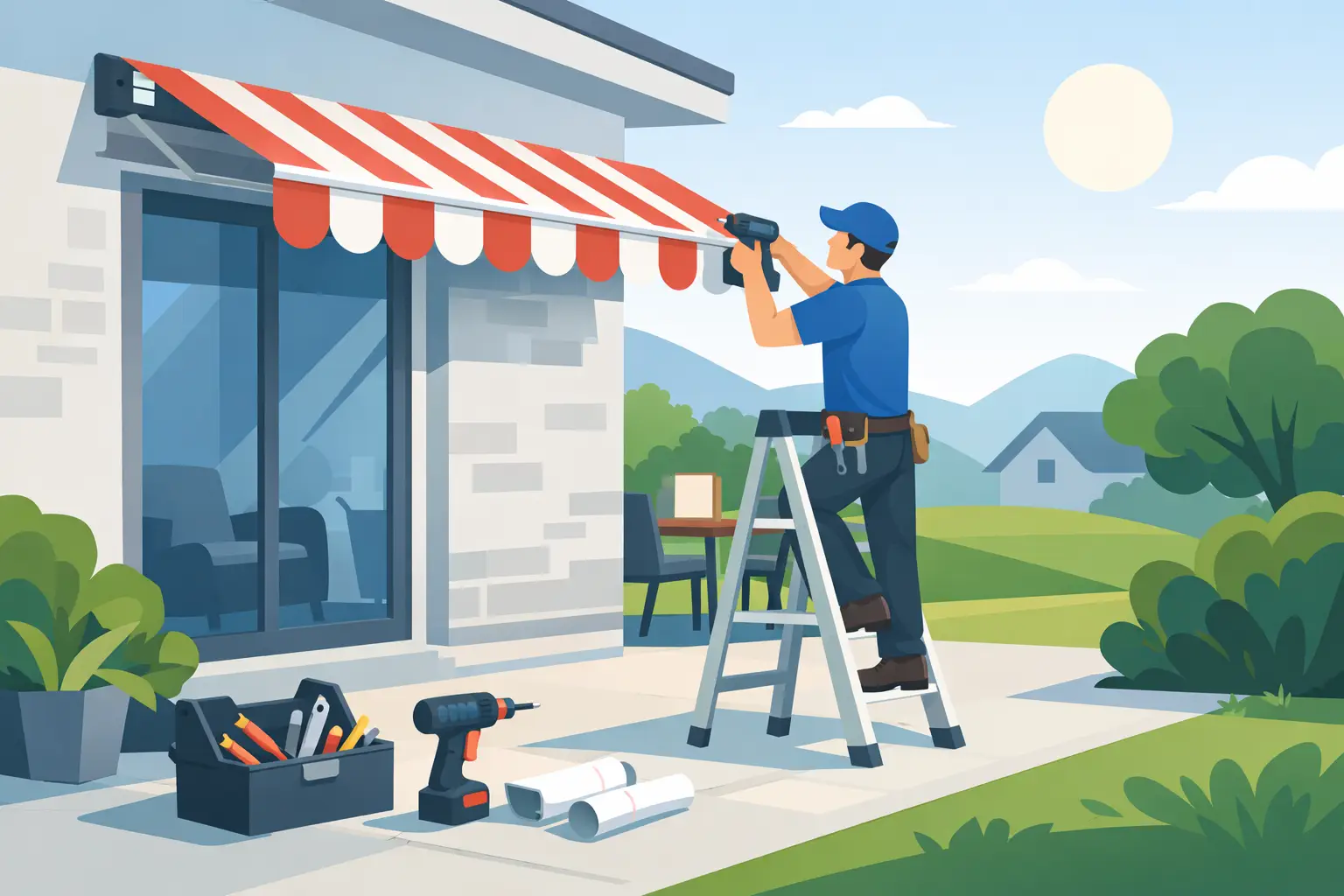
Awning Installation for Homes Done Right
A west-facing patio in Florida can look perfect at 10 a.m. and feel unusable by 3 p.m. That is usually when homeowners start asking about awning installation for homes – not because they want a trendy upgrade, but because they want real shade, better weather protection, and a space they can actually use more often.
If you are considering an awning for your house, the right decision has less to do with color samples and more to do with structure, placement, and how it will hold up in local conditions. In Panama City and across the Florida Panhandle, that matters. Sun exposure is intense, rain comes hard, and wind loads are not something to guess about.
What awning installation for homes should solve
A good awning should fix a specific problem on your property. Sometimes that problem is direct afternoon sun beating through a back door or heating up a patio. Sometimes it is rain pouring over a side entry, or an uncovered deck that sits empty half the year because it is just too hot to enjoy.
The best projects start with that practical question first: what do you need the awning to do? If the answer is shade, the size, extension, and orientation all matter. If the goal is protecting a doorway or outdoor furniture from rain, roof pitch and runoff become more important. If you want the awning to tie into an existing deck, screen room, or carport, then the attachment method and overall design need to work with the structure already on site.
That is one reason custom work usually performs better than a one-size-fits-all product. Homes are different. Roof lines are different. Drainage is different. The way sun hits a house in Lynn Haven is not always the same as a lot with no tree cover near Panama City Beach.
Choosing the right type of home awning
There is no single best awning for every property. It depends on where it is going, how much coverage you need, and how permanent you want the solution to be.
A fixed awning makes sense when you want dependable coverage all the time. These are common over patios, doors, windows, and outdoor living areas where constant shade and rain protection matter more than flexibility. A fixed system usually gives you a sturdier feel, but it also needs to be designed and installed with the structure and wind exposure in mind.
A retractable awning can work well if you want the option to open up the space when weather is nice. That flexibility appeals to some homeowners, but retractable systems also bring moving parts, more maintenance, and different durability considerations. In a storm-prone region, that trade-off needs to be weighed carefully.
Then there is the question of material. Aluminum awnings are popular because they hold up well, require relatively low maintenance, and fit many residential applications. Fabric can look great in the right setting, but in Florida humidity and weather, lifespan and upkeep should be part of the conversation. Wood-framed or more integrated roof-style coverings can also make sense when the awning is part of a larger outdoor structure plan.
Why installation matters more than the awning itself
A lot of homeowners compare awning styles before they think about attachment points, support loads, and code requirements. That is backward. The installation is what decides whether the project lasts.
An awning has to be tied into the home or supporting structure correctly. That means understanding the framing behind the exterior surface, not just fastening into siding, fascia, or trim and hoping for the best. It also means accounting for water management so you do not create leaks where there were none before.
In Northwest Florida, wind resistance is part of the job, not an upgrade. Poorly installed awnings can rack, loosen, leak, or fail early. Even if they stay attached, they can put stress in the wrong places if the load path was not planned properly. Homeowners usually do not see that problem right away. They notice it later when hardware pulls loose, water starts showing up near a door frame, or the awning never feels quite solid.
That is why licensed, experienced installation matters. A contractor used to Florida conditions approaches the project differently than someone treating it like a simple add-on.
Site conditions can change the whole project
Two houses can want the same awning and need completely different builds.
If your home has masonry, the mounting details may be different than they would be on wood framing. If you are installing over a deck, the deck itself may need to be evaluated to see whether it is ready to support the added design. If the area below the awning has poor drainage, the project might need gutter planning or grade adjustments so runoff does not create a new problem.
Sun angle matters too. A shallow awning that looks fine on paper may not block low afternoon sun the way you expect. On the other hand, going too deep can reduce light indoors or change how the front or back of the house feels visually.
This is where an on-site consultation makes a real difference. Measurements are one part of it. The other part is reading the property and seeing what will actually work.
Permits, codes, and storm-conscious construction
Homeowners sometimes assume an awning is too minor to involve permits or code review. Sometimes that is true, sometimes it is not. It depends on the structure, size, location, and how it is being attached.
In Bay County and surrounding areas, code compliance is not paperwork for the sake of paperwork. It is part of building something that can handle weather and protect your investment. When a project is designed with local requirements in mind, you have a better chance of getting a finished result that performs the way it should.
Storm-conscious construction also means thinking beyond the awning itself. How exposed is that side of the home? Is the awning attached near an opening that already gets wind-driven rain? Would a more substantial covered structure serve the property better over time than a lighter awning system?
Sometimes the honest answer is that an awning is the right fit. Other times, a roof extension, screen room, or covered patio structure may be the stronger long-term solution.
When a custom-built awning makes more sense
Many homeowners start by looking at packaged products. That is understandable. They seem straightforward, and the pricing looks simple up front. But packaged awnings are often designed around standard dimensions, generic attachment conditions, and average climates.
That can be a poor match for homes in the Florida Panhandle. When a project is built around the property instead of forced onto it, the result usually fits better, looks better, and performs better. That is especially true when the awning has to line up with an existing deck, cover a nonstandard patio, or work around specific roof lines and doors.
A custom builder can also help you think bigger than the awning by itself. If you already know you may want a screen room later, or if the awning ties into a future carport or outdoor living project, planning that now can save money and rework later.
For homeowners who care about long-term value, that is usually the smarter path. It is the same reason many local property owners choose on-site construction over delivered prefab products. The build is based on the property, not the other way around.
What to ask before hiring for awning installation for homes
Before you move forward, ask how the awning will be attached, what materials are being used, whether permitting is needed, and how the design accounts for wind and water. Ask whether the contractor has real experience building in Florida weather, not just selling products.
You should also ask what happens if the ideal size or placement is not possible with your current structure. A trustworthy contractor will tell you where the limits are. Sometimes a homeowner wants more projection than the wall or framing can reasonably support. Sometimes the best answer is to add posts or shift to a different design. Good guidance is not about saying yes to everything. It is about building something that will hold up.
If financing matters, bring that up early too. A lot of homeowners wait until the end, when it would be better to know their real options before finalizing scope.
A good awning should feel like it belonged there all along
The best awning projects do not look tacked on. They solve a real problem, fit the house, and stand up to the weather they are going to face.
That takes more than ordering a product and bolting it in place. It takes local experience, careful measurements, solid installation, and a builder willing to tell you what makes sense for your property and what does not. For homeowners in Panama City, Panama City Beach, and across Bay County, that kind of practical planning is what turns shade into a lasting improvement instead of a short-term fix.
If you are thinking about adding coverage to a patio, doorway, deck, or outdoor space, start with the structure first. When the build is right, the comfort and curb appeal follow naturally.
Prefab Shed vs Built on Site: Which Wins?
A lot of shed decisions look simple until the truck shows up. That is usually when property owners find out a prefab building does not fit the gate, does not sit right on the lot, or is not even leveled and anchored down to survive Florida weather. If you are weighing prefab shed vs built on site, the best option usually comes down to access, customization, code requirements including anchoring, and how long you want the building to last.
For some properties, a prefab shed works fine. For others, it creates limits before the building is even set down. In places like Panama City, Panama City Beach, and the surrounding Florida Panhandle, those limits matter more because wind exposure, drainage, and storm prep are not small details. They are part of whether the structure performs the way it should.
Prefab shed vs built on site: the real difference
A prefab shed is typically built off-site, then delivered mostly complete or in large sections. That can speed up the process if your lot is wide open, level, and easy to reach. It can also be appealing if you want a standard-size storage building and do not need many changes.
A built-on-site shed is constructed directly on your property. That gives the builder more control over fit, layout, foundation conditions, and site-specific adjustments. If your yard has a narrow access point, soft ground, slope issues, trees, fencing, or placement restrictions, building on-site often solves problems that a delivered prefab cannot.
This is where a lot of people start to see the trade-off. Prefab can look faster on paper. Built on site usually offers more flexibility and a better match to the property itself.
Access can decide the whole project
One of the biggest issues with prefab sheds is delivery access. A building can be well made and still be the wrong choice if a truck and trailer cannot get it into place without damaging a fence, lawn, driveway, or nearby structures.
That comes up often on established residential lots. Trees mature. Gates are narrow. Utilities, septic components, and landscaping all get in the way. A prefab dealer may have limited options once the building leaves the lot. If it cannot be delivered cleanly, you are left trying to rework the plan around the delivery method.
Built-on-site construction avoids that problem because the materials come in, not the finished building. For many homeowners in Bay County, that is not a minor convenience. It is the difference between getting the shed they want in the location they actually need.
Custom sizing matters more than people think
Most buyers start with storage in mind, but usage tends to grow. A building that begins as a place for lawn equipment can turn into a workshop, hobby space, inventory room, or small business support area. That is where prefab models can feel limiting.
Prefab sheds usually come in preset sizes and standard layouts. You may be able to choose a few options, but there are still guardrails around wall height, roof style, door placement, and window locations. If your lot has setback restrictions or you need the building to align with another structure, those preset dimensions can become a problem.
Built on site gives you room to work around the property instead of forcing the property to work around the building. You can size the structure to fit a narrow side yard, match an existing roofline, increase wall height for shelving, or set doors where equipment will actually move in and out easily. That kind of flexibility matters when the goal is long-term use, not just short-term storage.
Florida weather changes the conversation
In Northwest Florida, storm exposure should be part of any shed decision. Wind loads, anchoring, roofing details, and how the building is tied together all matter more here than they might in other parts of the country.
This is one reason the prefab shed vs built on site question is not just about convenience. It is also about how well the building can be adapted to local conditions. A standard prefab model may be designed for broad markets, not specifically for the wind and weather demands of the Florida Panhandle.
A shed built on-site by licensed professionals can be planned around local code requirements and hurricane-conscious construction practices. That does not mean every prefab building is poorly made. It means local site conditions and regional weather often call for a more tailored approach than a one-size-fits-most product can offer.
For property owners who have already dealt with tropical storms, roof damage, or standing water, this part of the decision tends to carry more weight than price alone.
Cost is not as straightforward as the sticker suggests
Prefab sheds often look less expensive at first glance. The base price may be lower, and the sales process is usually built around standard models that are easy to quote quickly. That can make prefab seem like the clear budget option.
But the real project cost depends on more than the advertised building price. Delivery charges, site prep, leveling, permits, tie-downs, upgrades, and access complications can all change the number. If the prefab structure needs modifications to work on your property, the savings can shrink fast.
Built-on-site construction can cost more up front, especially when you are choosing custom dimensions or stronger materials. Even so, many owners find the value is better because the building fits the space correctly, performs better over time, and does not force compromises that lead to regrets later.
The right cost question is not just, “Which one is cheaper today?” It is, “Which one gives me the building I actually need without creating extra problems next month or five years from now?”
Permits, codes, and local compliance
Permitting is another area where the details matter. Depending on size, location, and intended use, your project may need to meet specific code and permitting requirements. That is especially true if the building is more than basic storage or if it will have electrical service, upgraded structural features, or placement considerations tied to setbacks and drainage.
With prefab sheds, buyers assume that because most all pre fab deliverers are not certified contractors and cannot pull a building permit even if they wanted to. In reality, local compliance still applies. The structure may still need to meet site-specific rules once it reaches your property.
With built-on-site work, the process is usually easier to align with the property from the beginning. An experienced local contractor can account for placement, code issues, and practical build requirements before construction starts. That reduces surprises and helps keep the project moving in the right direction.
Built on site usually makes more sense for difficult lots
Not every property is a clean rectangle with easy access and unlimited placement options. Many are tight, sloped, partially fenced, or shaped by existing improvements. If your lot has quirks, the ability to build on-site becomes a serious advantage.
That is particularly true near the coast, where drainage patterns, soil conditions, and wind exposure can vary from one property to the next. A site-built structure can be adjusted in ways a delivered prefab simply cannot. That includes orientation, foundation approach, entry placement, and design details that help the building work with the lot rather than against it.
For homeowners who plan to stay put and want a building that feels like part of the property, not an add-on dropped into the yard, built on site is often the better fit.
When a prefab shed still makes sense
There are times when a prefab shed is a reasonable choice. If you need a basic storage solution, your property has wide-open access, and your expectations are simple, prefab can do the job. It may also appeal to buyers who want the fastest path to a standard building and do not need much customization.
That said, it helps to be honest about what “simple” means. If you are already thinking about future use, exact sizing, storm durability, or a tricky install location, you are probably outside the ideal prefab scenario.
The better question is how your property will use the building
Most shed buyers are not really comparing products. They are trying to solve a property problem. They need room for tools, equipment, seasonal items, business supplies, vehicles, or workspace. The best choice depends on how the building needs to function day after day.
If the structure has to fit a specific footprint, stand up to Florida conditions, and serve you for years, built on site usually offers more control and fewer compromises. That is why many local owners choose an on-site approach, especially when they want contractor-grade workmanship, custom options, and a building designed around their lot instead of a delivery route.
For property owners across Bay County and nearby areas, that local experience matters. A veteran-owned company with more than 20 years serving the Florida Panhandle understands that a shed is not just a box for storage. It is part of how your property works, and it needs to be built right the first time.
If you are still deciding between the two, start with the realities of your site, not the brochure. The right shed should fit your land, your weather, and the way you plan to use it long after the new-building excitement wears off.
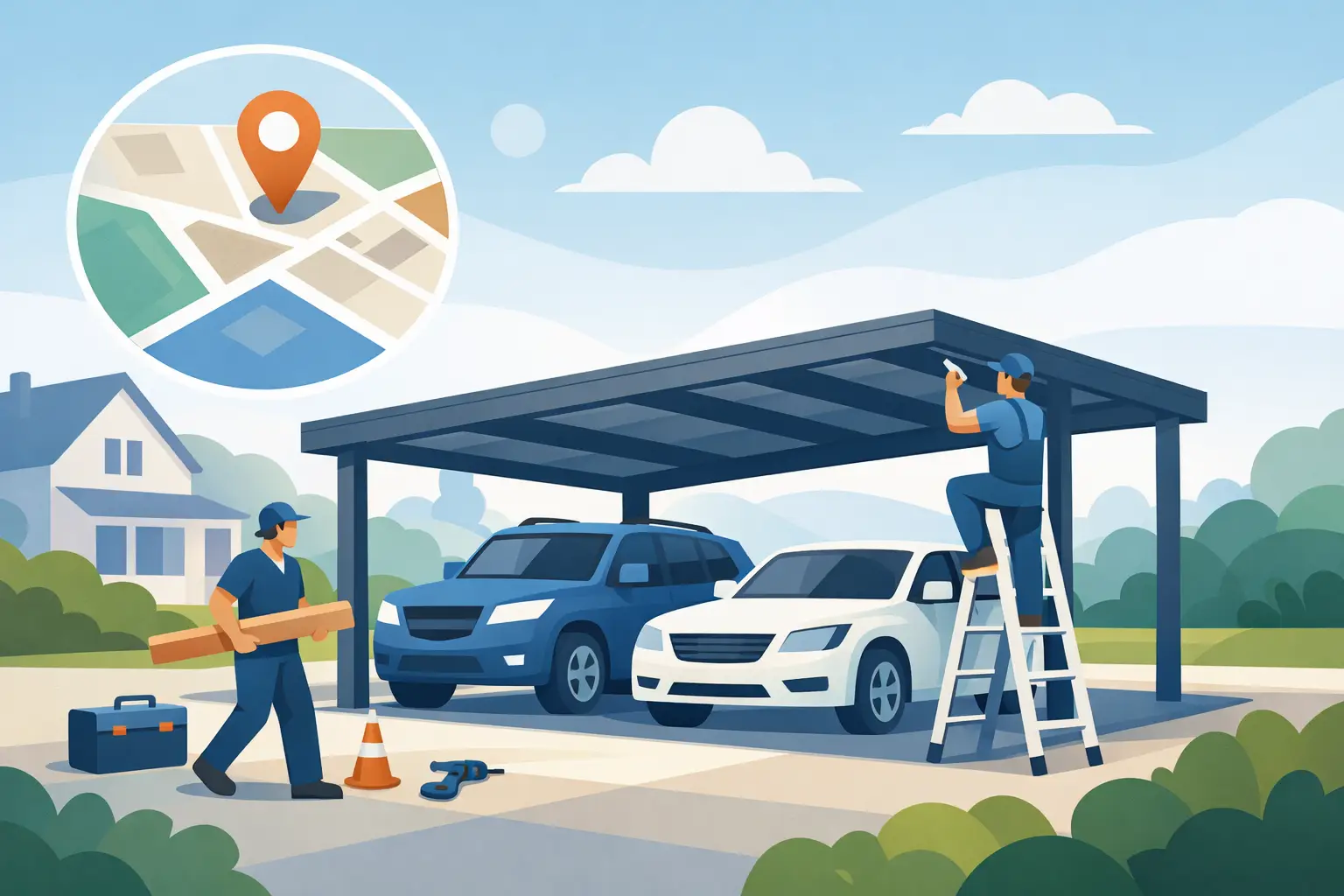
Custom Carport Installation Near Me
If you have ever searched for custom carport installation near me after stepping into a truck that was baking in the sun or finding storm debris around your vehicle, you already know this is not really about adding a simple cover. Around Panama City and the Florida Panhandle, a carport has to fit your property, handle weather, and actually protect what you park under it.
A lot of property owners start with one question – how much does a carport cost? That matters, but it is usually not the first thing that decides whether a project works out well. The bigger issue is whether the structure is designed for your site, your vehicles, and local conditions. That is where custom work starts separating itself from off-the-shelf options.
What custom carport installation near me should actually mean
When people look up custom carport installation near me, they are often trying to avoid a one-size-fits-all structure that leaves them with the wrong height, poor drainage, weak anchoring, or a roof line that looks out of place next to the home. Custom should mean the carport is planned around your property instead of forcing your property to work around a prebuilt design.
That starts with dimensions. A small sedan, a lifted truck, a boat, or an RV all need different clearances. Width matters just as much as height because you need room to open doors, walk around the vehicle, and account for mirrors, trailers, or equipment. A carport that technically fits on paper can still be frustrating to use every day.
It also means the layout has to make sense. Some lots need a stand-alone structure away from the house. Others work better with an attached cover near a driveway or side pad. On some properties, the best answer is not a basic carport at all but a larger cover that can protect a vehicle on one side and leave room for storage or a workshop area on the other.
Florida weather changes the whole conversation
In Northwest Florida, you cannot treat a carport like a lightweight accessory. Wind exposure, heavy rain, salt air in coastal areas, and storm season all affect how the structure should be built. This is one reason local experience matters so much.
A contractor who works in Bay County and surrounding areas understands that roof style, anchoring, bracing, and material choices are not cosmetic decisions. They affect how the carport performs when weather turns rough. A project that looks fine in a catalog may not be the right fit for a Gulf Coast property.
This is also where licensed construction matters. Permits, code requirements, setbacks, and wind load considerations need to be handled correctly from the start. If a builder glosses over those details, the problem usually shows up later during inspections, insurance questions, or the first major storm.
Built on-site vs delivered prefab
One of the biggest decisions is whether you want something dropped onto the property or built on-site. For many Florida lots, on-site construction is the better option because it gives more control over fit, elevation, access, and structural details.
That matters when your site is tight, uneven, or has drainage challenges. It also matters when the carport needs to match an existing driveway, line up with another building, or work around fencing, utilities, or tree placement. A delivered structure can be limiting if the lot is not simple and wide open.
Built-on-site construction also gives you more flexibility if you want the carport tied into a larger plan. A lot of property owners start with vehicle coverage and later want to add enclosed storage, a workshop, or an RV cover. Planning for that possibility upfront can save money and headaches later.
How to judge a local carport contractor
If you are comparing companies for a custom carport, look past the sales pitch and pay attention to how they approach the project. A good contractor should ask about your vehicles, your lot, water flow, access, setbacks, and whether you want the structure to serve one purpose or several.
They should also be willing to come out and look at the site. Free on-site consultation is not just a convenience. It is often the only way to catch issues that do not show up in photos, like slope changes, soft ground, clearance problems, or poor driveway approach angles.
You also want to know whether the company has local building experience and proper licensing for this kind of work. In this part of Florida, hurricane-conscious construction is not a bonus feature. It is part of doing the job right. A veteran-owned, local contractor with years of experience in the Panhandle brings a different level of practical judgment than a company trying to sell the same package in every market.
Common design choices that affect price and performance
The cost of a custom carport can vary quite a bit because the design choices are doing real work. Size is an obvious factor, but roof style, material type, attachment method, and site preparation can change the total just as much.
Height is one of the most overlooked details. If you only build for the vehicle you own today, you may regret it later when you switch to a taller truck, add a roof rack, or buy a boat. At the same time, going taller than necessary can affect wind exposure and overall cost. There is usually a practical middle ground.
Roof design matters too. The right roof line should shed water well, handle local weather, and look right on the property. Drainage is part of that decision. If rainwater is pushed into the wrong area, you can create standing water, erosion, or muddy access around the slab or driveway.
Then there is the question of open versus partially enclosed. Some property owners want a straightforward cover. Others want a side wall for wind protection, privacy, or shade. That can improve usefulness, but it also changes how the structure handles wind and how the site needs to be planned.
Why the cheapest bid often costs more later
A low quote can be tempting, especially if two carports look similar in a photo. The problem is that the differences are often hidden in the structural details, permit handling, material quality, and site work.
If the builder skips proper anchoring, underestimates wind requirements, or uses a design that does not suit your lot, the short-term savings can disappear fast. Repairs, modifications, drainage fixes, and code issues cost money. So does replacing a structure that never should have been installed that way in the first place.
The better question is not just what the carport costs today. It is what value you get over time. A properly built carport protects vehicles, reduces weather wear, adds usable covered space, and can improve how a property functions for years.
What to expect during a custom carport project
A solid project usually begins with a site visit and a real conversation about how you plan to use the structure. The contractor should look at dimensions, placement, access, surrounding improvements, and local code requirements before recommending a design.
From there, you should expect clear guidance on size, layout, material options, and whether any site prep is needed. Some properties need very little work. Others need grading, a pad, or coordination with existing concrete. This is one of those areas where it depends on the lot.
Once the design is set, the contractor should explain the permit side, the build process, and the timeline in plain language. Good communication matters here. Most property owners are not looking for fancy construction talk. They just want to know what is being built, why it is being built that way, and what happens next.
For homeowners and small business owners who do not want to pay all at once, financing can also be part of the conversation. That does not change the need for a well-built structure, but it can make it easier to get the right one now instead of settling for a cheaper compromise.
Choosing a carport that still makes sense five years from now
The best carport projects are not designed only for the current parking problem. They are planned around how the property will be used over time. Maybe you need to protect one vehicle today, but later you may want room for a second vehicle, a boat, a trailer, or enclosed storage nearby.
That is why custom planning matters. A good builder will help you think ahead without overselling you on space you do not need. In many cases, the right answer is a straightforward structure with smart dimensions and proper site placement. In others, it makes more sense to plan for a larger multi-use cover from the start.
Around Panama City, Panama City Beach, and the surrounding Florida Panhandle, property owners usually know when a temporary solution is not going to hold up. If you are investing in a carport, it should be built for your lot, your vehicles, and Florida weather – not just ordered to check a box.
A well-built carport should feel like it belonged on the property all along, and that usually starts with a contractor willing to look closely, build on-site when needed, and do the work right the first time.
Storage Building Permits in Bay County Florida
A lot of shed projects go sideways before the first post is set. Not because the building is wrong, but because the permit questions came too late. If you are looking into storage building permits in Bay County Florida, the smartest move is to sort out code, placement, and site conditions before you spend money on plans or materials.
In Bay County, permit requirements can depend on more than just the size of the structure. The building’s use, how it is anchored, where it sits on the lot, local wind requirements, and whether utilities are involved can all affect what is needed. That is why two storage buildings that look similar on paper may not follow the exact same path through permitting.
For homeowners in Panama City, Panama City Beach, Lynn Haven, and nearby areas, this is where local experience matters. A storage building in the Florida Panhandle has to do more than hold tools and lawn equipment. It has to fit the property, meet code, and stand up to the kind of weather we all know can show up fast.
When a storage building permit may be required
The first thing most property owners want is a simple rule. The truth is, permit decisions are usually based on a combination of factors, not one single detail. Size matters, but it is not the whole story.
In general, Bay County property owners should expect a closer review when a storage building is a permanent structure, built on-site, anchored to meet wind load requirements, or intended for more than basic yard storage. If the building includes electrical service, plumbing, or any finished interior use, the odds of needing permits go up. The same applies if the structure is close to property lines, located in a flood-prone area, or part of a larger site improvement.
Zoning also plays a role. A detached storage building might be allowed in one part of a property but not another. Setback rules, lot coverage limits, easements, and neighborhood restrictions can all affect approval. County rules and city rules are not always identical either, so the exact project address matters.
That is why experienced contractors do not guess. They verify what applies to your parcel before the build starts.
Storage building permits in Bay County Florida are not just about size
One of the biggest misunderstandings is that permit requirements only kick in once a shed reaches a certain square footage. Size can be part of the equation, but it is not the only trigger.
For example, a small building that is permanently installed and engineered for local wind exposure may still require permitting review. On the other hand, a structure someone thinks is “temporary” may not be treated that way if it is anchored, roofed, and intended to remain in place long term. In coastal and storm-prone areas, the county is looking at safety, not just dimensions.
Use matters too. A basic storage building is one thing. A workshop, hobby room, office space, or building with power for tools is another. Once the structure moves beyond simple storage, code requirements often become more detailed. That can involve electrical permits, foundation or anchoring requirements, and additional inspections.
This is also where many delivered prefab buyers run into trouble. A building that can be dropped on a lot is not automatically approved for that lot. Site conditions, access, soil, drainage, setbacks, and code compliance still have to be addressed.
What Bay County property owners should check first
Before choosing a building style or locking in a footprint, start with the site itself. The lot often tells you more than the brochure does.
First, look at where the building can realistically go. Property lines, septic systems, utility locations, drainage paths, and existing structures can limit placement. What looks like the perfect corner of the yard may not meet setback requirements or may create water problems during heavy rain.
Next, consider the building’s intended use. If you want lights, outlets, roll-up doors, a workbench, or room for equipment, say that up front. Those details affect design, permitting, and cost. It is much easier to plan correctly from the start than to retrofit after inspections begin.
Then think about wind and anchoring. In Bay County, this is not a minor detail. Storage buildings need to be designed and installed with Florida weather in mind. The right tie-downs, framing methods, roof attachment details, and site-specific construction approach can make a major difference over the life of the building.
Flood zone status is another item worth checking early. If your property is in a flood-prone area, elevation and placement requirements may affect what can be built and how it must be installed.
Why on-site construction can make permit planning easier
A lot of property owners assume a prebuilt shed is the simpler route. Sometimes it is not. Transport limits, delivery access, leveling issues, and code concerns can all complicate the job.
Building on-site often gives you more control over compliance because the structure can be designed around the actual property instead of forcing the property to accommodate a prebuilt unit. If your yard has fencing, narrow access, trees, soft spots, or tight setbacks, on-site construction gives a contractor more flexibility to fit the building where it belongs.
It also helps when local code and weather requirements are part of the conversation from day one. In this part of Florida, a storage building is not just a box with a door. It has to be framed, anchored, and roofed for real conditions. That is one reason many local property owners prefer a licensed contractor who builds on-site rather than a one-size-fits-all shed delivered from somewhere else.
Common permit-related mistakes that cost time
Most permit problems are avoidable. They usually come from assumptions made too early.
A common mistake is buying or designing the building before confirming setbacks and zoning. Another is assuming that because a neighbor has something similar, the same setup will be approved on your lot. Parcel conditions can be different even on the same street.
Some owners also underestimate the impact of upgrades. Adding power, changing the use from storage to workspace, or increasing the height can shift the permit requirements. Another issue is starting site work too soon. Clearing, leveling, or placing materials before approvals are in place can create headaches if the plan has to change.
The biggest mistake, though, is treating permits like a paperwork nuisance instead of part of the construction process. Permits are there to make sure the building is placed safely and built to current standards. In a hurricane-prone area, that matters.
Working with a contractor on storage building permits in Bay County Florida
If you are hiring a builder, ask direct questions early. Will the project be built on-site or delivered? Is the contractor licensed for the type of work involved? Who is responsible for preparing permit-ready plans, confirming setbacks, and coordinating inspections if they apply?
A good contractor should be comfortable talking through the practical side of permitting without overpromising. No one should guarantee approval before reviewing the property and the scope of work. What they can do is help you avoid the usual mistakes, explain likely requirements, and build the project the right way from the start.
That local knowledge is especially valuable in Bay County and across Northwest Florida, where weather exposure and site conditions are real factors. A veteran-owned company with years of experience in the Florida Panhandle understands that code compliance is only part of the job. The building also has to perform when storms roll through and still serve your needs years down the road.
For many owners, financing is part of the decision too. When a storage building is being built as a long-term improvement instead of a temporary fix, it makes sense to plan the project correctly, permit questions included, rather than cut corners up front and pay for it later.
The best next step before you build
If you are serious about adding a storage building, start with a site-specific conversation. Not a generic price sheet, and not a guess based on a building someone saw online. The right first step is to look at the property, define how the building will be used, and sort out the county or municipal requirements that may apply.
That approach saves time, protects your investment, and helps you avoid building something that does not fit your lot or your long-term needs. Around here, doing it right the first time is always cheaper than fixing it after the fact.
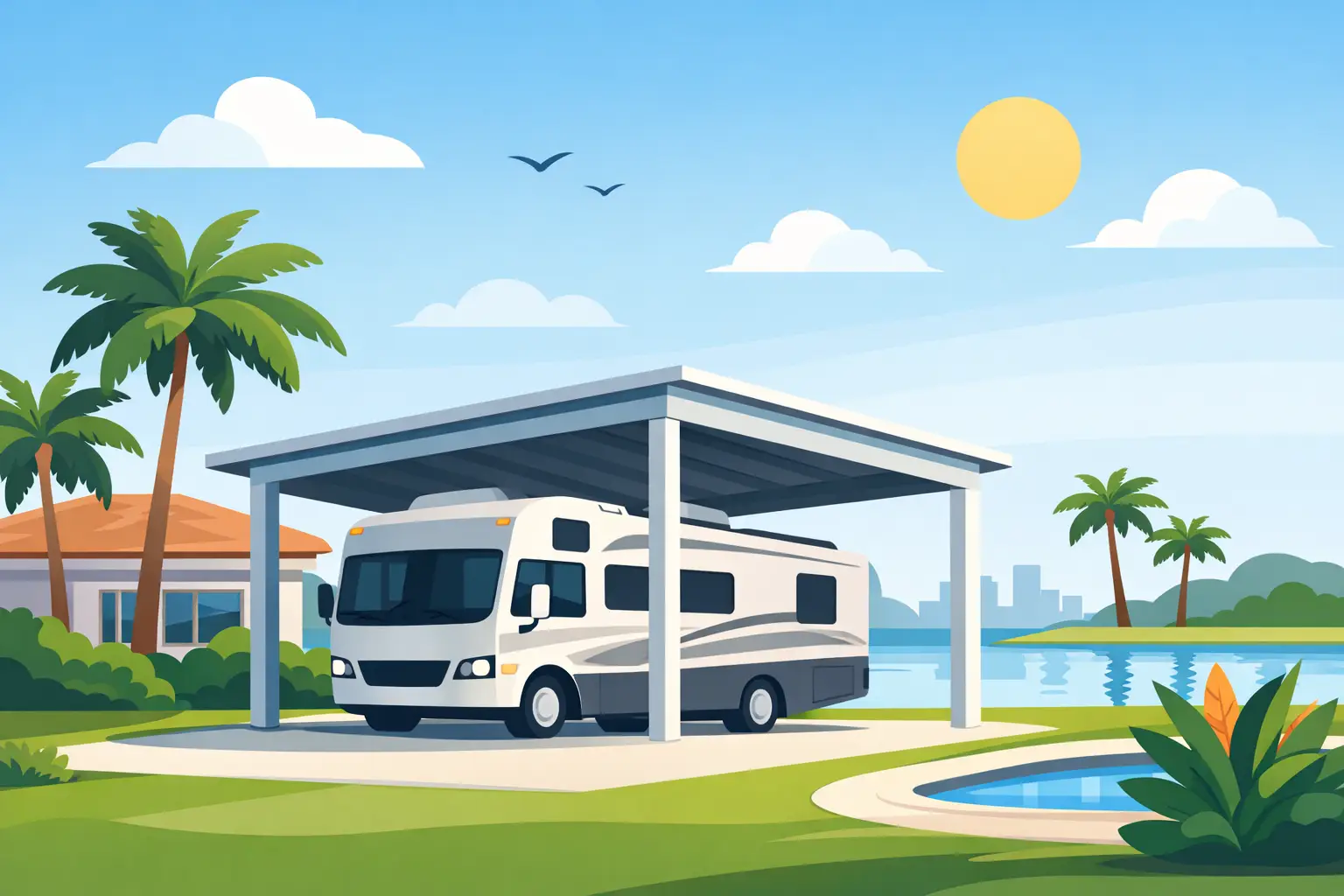
RV Cover Builder Florida Property Owners Trust
A parked RV takes a beating in Florida faster than most owners expect. Sun breaks down sealants, heavy rain finds weak spots, and one storm season can age a rig in a hurry. That is why choosing the right rv cover builder florida property owners can rely on is less about looks and more about protection, engineering, and getting the job built right for your site.
An RV cover is not a generic metal roof dropped onto a piece of land. In this part of Florida, every property comes with its own grade, drainage pattern, access limits, setback rules, and wind exposure. A cover that works fine in another state may not hold up here, and a one-size-fits-all approach usually creates problems later.
What a good RV cover actually needs to do
Most people start with a simple goal – keep the sun and rain off the RV. That matters, but it is only the beginning. A well-built RV cover should protect your investment, make access easier, and fit the way you actually use your property.
For some owners, that means enough clearance for air conditioners, antennas, or upgraded roof accessories. For others, the bigger issue is door access, slide-out space, or room to walk around the unit without squeezing between posts. If you use your RV often, convenience matters almost as much as weather protection. A cover that is technically the right size but awkward to pull into will become a daily frustration.
The best design usually balances three things at once: the dimensions of the RV, the conditions on the property, and the local code requirements. If one of those gets ignored, the project may still get built, but it will not perform the way it should.
Why an rv cover builder florida residents hire should build on-site
This is where a lot of projects go sideways. Some companies treat RV covers like off-the-shelf products. They sell a standard package, deliver materials, and try to make it fit. That can work on a flat, open lot with no surprises, but many Florida properties are not that simple.
Building on-site gives you better control over the finished structure. The cover can be laid out around actual site conditions instead of guessed dimensions. Post placement can match vehicle clearance. Roof lines can be planned with drainage in mind. Height can be adjusted to the RV you own now and the one you may own later.
That matters even more near the Gulf Coast, where wind loads are a real issue and poor placement can create stress points. A builder who works on-site can account for the land, surrounding structures, and the practical way you enter and exit the cover. The result is a structure that feels intentional instead of forced.
Florida weather changes the whole conversation
In many parts of the country, an RV cover is mainly about shade. In Florida, it is also about storm durability. High winds, pounding rain, salt-heavy air in coastal areas, and long stretches of sun all affect what materials and building methods make sense.
That does not mean every owner needs the exact same structure. It means the builder should be asking the right questions. Is the property exposed or sheltered? Is the soil stable? How close are you to the coast? Will water run away from the slab or posts, or collect around them? Do you need a simple roof-only cover, or a stronger setup that ties into a broader site plan?
There are trade-offs. A taller cover gives better clearance but can increase wind exposure if it is not designed correctly. A wider span may reduce post interference, but it can also change material needs and cost. The right answer depends on the RV, the site, and how much protection you want over the long term.
Sizing mistakes cost more than people think
One of the most common problems with RV covers is undersizing. Owners measure the body length and height of the vehicle, then forget mirrors, ladders, roof equipment, turning clearance, and future upgrades. The cover may fit on paper and still be too tight in real use.
A practical design leaves enough room to back in without a white-knuckle maneuver every time. It also considers whether you want to open doors, access storage compartments, or perform maintenance under cover. If the unit is used regularly, extra space is not a luxury. It is part of making the structure functional.
Oversizing has its own trade-offs. Bigger is not always better if the structure starts crowding setbacks, interfering with drainage, or creating unnecessary cost. A dependable builder will help you find the right dimensions, not just sell the biggest roof possible.
Permitting, codes, and licensing are not side issues
A lot of customers do not think much about permits until a problem comes up. Then it becomes the whole project. In Florida, code compliance matters from the beginning, especially for exterior structures that must handle wind and weather.
A qualified builder should understand local permitting, structural requirements, and how to plan a project that fits your property legally and safely. That includes things like setbacks, foundation considerations, attachment details, and load requirements. Skipping those steps may look cheaper at first, but it can create expensive headaches with inspections, insurance, resale, or storm damage later.
This is one reason many property owners prefer working with a licensed contractor instead of chasing the lowest bid. The value is not just in getting the cover built. It is in knowing the job was handled correctly from design through completion.
Materials matter, but workmanship matters more
Customers often ask what material is best, and that is a fair question. Roof panel quality, framing strength, fasteners, and finishes all matter. Still, even solid materials can underperform if the construction is sloppy.
Poor anchoring, weak connections, rushed layout, and careless installation create failures long before the material itself wears out. A dependable RV cover comes from the full package – proper design, contractor-grade materials, and experienced workmanship.
That is especially true in Florida, where small mistakes get exposed fast. Water intrusion, corrosion, uplift stress, and movement do not stay hidden for long. A builder with local experience understands which details deserve extra attention because they have seen what happens when those details are missed.
The best rv cover builder florida customers choose asks better questions
A good consultation should feel practical, not salesy. You want a builder who asks where the RV sits now, how often you move it, whether you plan to upgrade, what the approach path looks like, and what problems you are trying to solve besides simple overhead cover.
Sometimes the answer is a straightforward RV cover. Other times, the smarter move is part of a larger property plan that includes added storage, a nearby shed, a workshop area, or a layout that leaves room for future improvements. That kind of thinking helps you avoid building something that works for one year but boxes you in for the next ten.
This is where a local, service-driven contractor stands apart. Tool Time Buildings builds on-site for the property in front of them, not for an imaginary perfect lot. That approach gives customers a structure that fits better, performs better, and holds up the way it should in Florida conditions.
Long-term value is bigger than the upfront number
Every customer has a budget, and that is real. But when you compare prices, it helps to compare the full value of the project, not just the initial quote. A cheaper cover that is undersized, poorly anchored, or not built to the site can cost more later in repairs, modifications, or replacement.
A well-built RV cover protects the vehicle, reduces wear, and gives you daily convenience. It can also improve the usefulness of your property by creating a dedicated protected space that supports travel, storage, and maintenance. For many owners, that return is what makes the project worthwhile.
The right builder should be honest about what you need, what you do not need, and where spending more actually makes a difference. That kind of straight answer builds trust, and trust matters when you are putting a permanent structure on your land.
If you are planning an RV cover, start with the conditions on your property and the way you use your RV, not with a stock package. A structure built for your site, your vehicle, and Florida weather will serve you better for years to come.
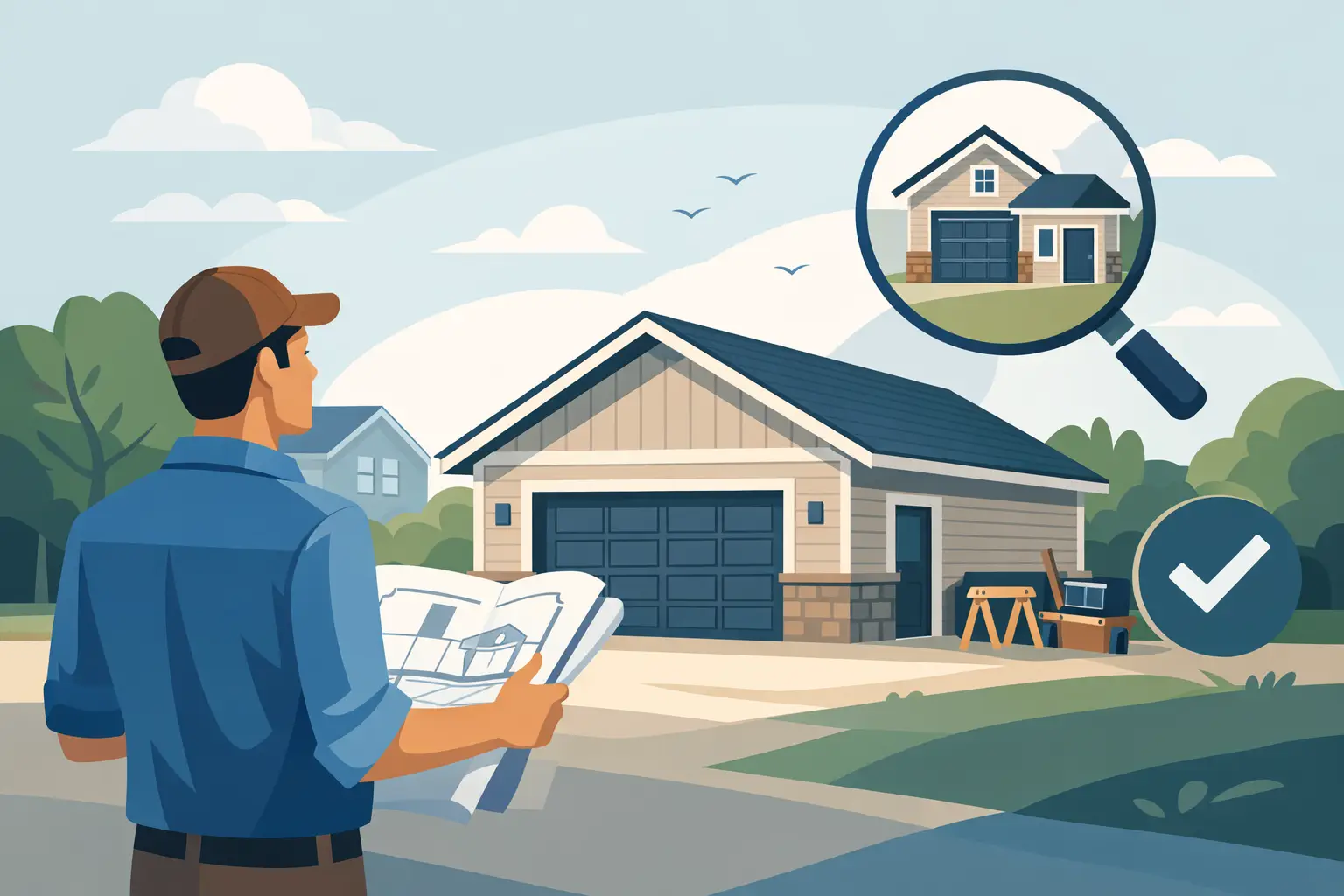
Choosing a Custom Detached Garage Builder
A detached garage sounds simple until you start planning one for real Florida weather, real storage needs, and a real property layout. That is where the right custom detached garage builder makes a difference. You are not just adding a box in the yard. You are adding usable square footage, protecting vehicles and equipment, and making sure the structure fits your lot, your goals, and local code from day one.
For many property owners in Panama City and along the Gulf Coast, a detached garage solves more than one problem at once. It can clear out an overcrowded home garage, create a secure workshop, protect a boat or truck, or give a small business extra room for tools and materials. The catch is that the building has to be planned for the site it will sit on. Drainage, setbacks, wind loads, roof design, access, and foundation needs all matter more here than they do in many other parts of the country.
What a custom detached garage builder actually does
A true custom builder does more than offer a few standard sizes and ask you to pick a color. The job starts with the property itself. Lot dimensions, grade, soil conditions, access points, and nearby structures all affect how the garage should be designed and built.
That custom approach matters because two properties on the same street can have very different needs. One homeowner may need a single-bay garage with attic storage and a side entry. Another may need a larger structure with room for a truck, lawn equipment, and a workbench. A small business owner may need wide doors, better clearance, and a layout that makes loading and unloading easier. A builder who works from the site outward can account for those differences instead of forcing every customer into the same footprint.
It also changes how the finished garage performs over time. When a garage is designed for your actual property, it is more likely to drain properly, match the house, handle local weather, and feel like it belongs there.
Why on-site construction matters for a custom detached garage builder
This is one of the biggest differences between a contractor-built garage and a delivered prefab structure. With on-site construction, the building is assembled where it will live. That gives the builder more control over fit, foundation prep, structural connections, and details that affect long-term durability.
For Florida properties, that is a practical advantage. Site access is not always easy. Trees, fences, overhead lines, and narrow driveways can turn delivery into a problem before the project even starts. Building on-site avoids forcing a prebuilt structure onto a lot that was never suited for that kind of install.
There is also the question of strength. A garage meant to protect vehicles, equipment, and stored belongings needs to be more than convenient. It needs to be built to code and built for local conditions. That includes proper framing, anchoring, roofing details, and materials that stand up to heat, humidity, heavy rain, and storm exposure.
What to look for in a detached garage plan
A good garage starts with how you plan to use it six months from now, not just next week. If you only focus on today’s immediate need, it is easy to end up with a building that feels too small or poorly laid out once you start using it.
Think first about clearance and movement. Door width matters if you have a full-size truck, trailer, mower, golf cart, or boat. Interior depth matters if you want room to park and still walk around the vehicle. Wall height matters if you need shelving, overhead storage, or a lift-style setup for work. These are small decisions on paper, but they shape whether the garage feels useful or cramped.
The roof style matters too. Some property owners want the garage to visually match the home. Others care more about maximizing overhead storage or getting the best drainage pattern for the site. There is no single right answer. It depends on the lot, the look you want, and how the building will be used.
Electrical planning is another area where people often think too small. If the garage will be used as a workshop, hobby space, or business support area, you may need more outlets, better lighting, or dedicated circuits. It is easier and more cost-effective to plan for that up front than to retrofit later.
Custom detached garage builder questions worth asking
When you talk with contractors, the questions should go beyond price. Cost matters, but it should be weighed against scope, structural quality, and whether the builder is set up to do this kind of work properly.
Ask how the garage will be built for local wind and weather conditions. Ask whether the builder is licensed for the work being performed. Ask how the design will be adjusted for your lot rather than pulled from a generic package. Ask what is included in the quote, what is optional, and what site conditions could affect the final build.
You should also ask who is actually doing the work. There is a big difference between a company that coordinates a project and one that understands construction firsthand. When a builder knows the field side of the job, you tend to get better problem-solving, cleaner execution, and fewer surprises during construction.
A reliable contractor should be comfortable having these conversations. Detached garages are substantial projects. You want straight answers, clear expectations, and a plan that makes sense before work begins.
Florida conditions change the stakes
Along the Gulf Coast, building decisions cannot be based on appearance alone. Wind resistance, moisture management, roofing quality, and structural connections are not extra features. They are part of whether the building will hold up.
That is one reason custom work has value. Florida properties often present variables that standard packages do not address well. You may be dealing with a tight backyard layout, a sloped area, drainage concerns, or a need to match an existing home or outbuilding. A detached garage that ignores those factors may still get built, but it may not perform the way it should.
This is also where contractor-grade workmanship matters. When a garage is built on-site with attention to framing, fasteners, roof systems, and code requirements, you are buying more than extra storage. You are buying confidence that the structure was built with the local environment in mind.
For many customers, that peace of mind is worth more than the lowest bid.
The trade-off between prefab pricing and custom value
Some buyers start by comparing a custom detached garage builder to prefab options because the upfront price can look lower on a mass-produced unit. That comparison is understandable, but it is not always apples to apples.
A prefab structure may work for basic storage on a straightforward site. But if you need exact dimensions, better durability, cleaner property fit, stronger weather performance, or a layout tailored to vehicles and equipment, custom construction usually makes more sense. The initial investment may be higher, but the return often shows up in daily use, longer service life, and fewer compromises.
There is also the matter of appearance and property value. A detached garage that complements the home and sits correctly on the lot tends to look like a permanent improvement, not an afterthought. That can matter if you plan to stay for years or if resale value is part of your thinking.
Why local experience matters
A builder with local experience understands more than construction methods. They understand permitting expectations, common site challenges, weather patterns, and the practical needs of homeowners and small business operators in this area.
That local knowledge often leads to better recommendations. Maybe your original size needs to change because turning clearance will be tight. Maybe a different roof pitch makes more sense for drainage. Maybe the placement needs adjustment to preserve access for another structure down the road. Those are the kinds of details that can save frustration later.
For property owners who want the job done right, it helps to work with a company that treats the project as a real building, not just another unit to sell. That is the kind of approach Tool Time Buildings is known for across Panama City and the surrounding area.
A detached garage should make your property work better, not create new headaches. If you choose a builder who values site-specific planning, licensed workmanship, and long-term durability, you are far more likely to end up with a structure that earns its keep every day.
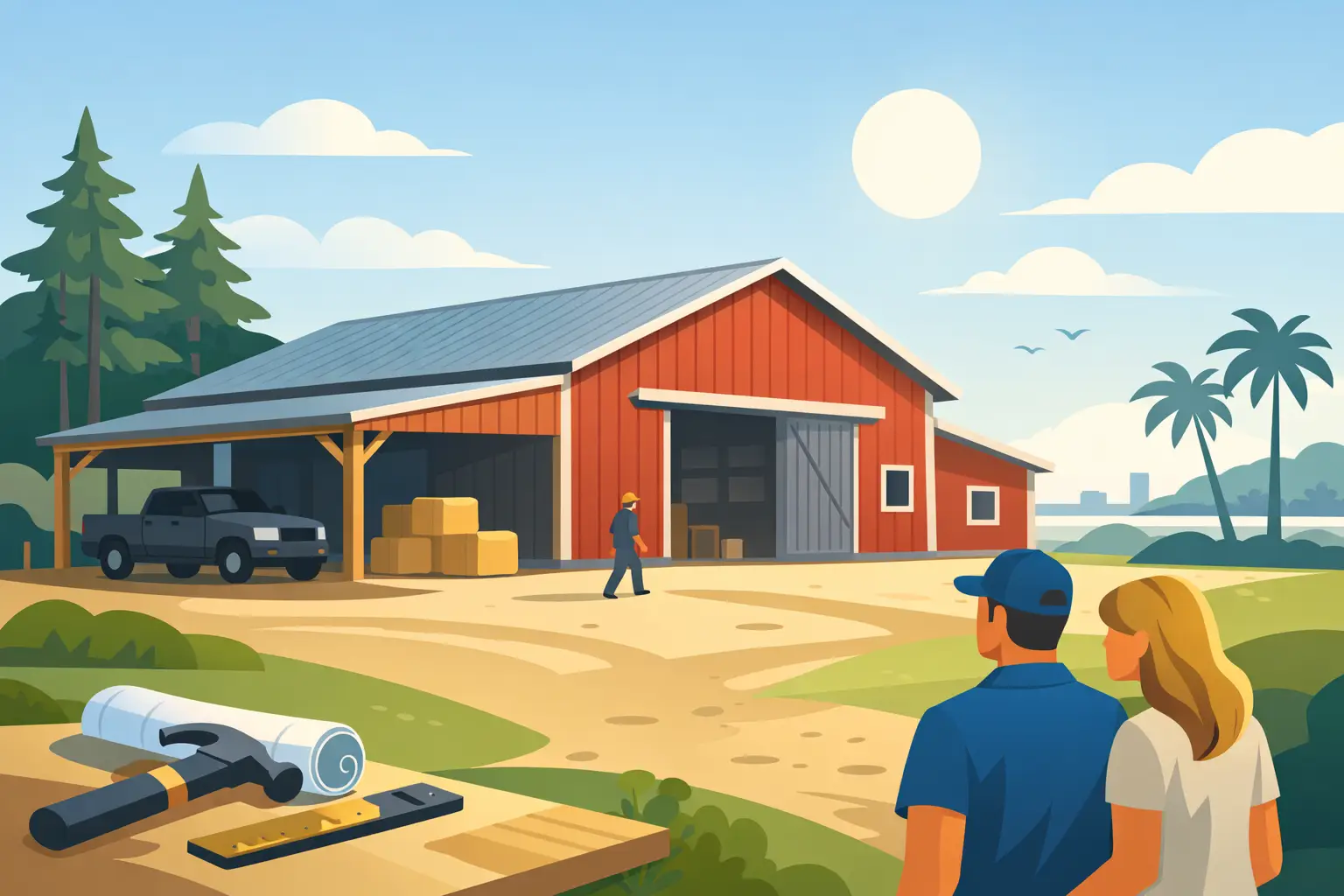
Pole Barn Builder Panama City Homeowners Trust
A pole barn in Panama City has to do more than look good on day one. It has to stand up to heat, humidity, hard rain, salt air, and storm season without becoming a constant repair project. That is why choosing the right pole barn builder Panama City property owners can rely on is less about finding the cheapest price and more about finding a contractor who builds for local conditions.
For most customers, a pole barn starts with a practical need. You may need covered space for equipment, a place to store a boat, protection for an RV, a workshop, a hay or feed shelter, or a multi-use structure that keeps your property organized. The real question is not whether a pole barn is useful. The question is whether it is designed and built to fit your land, your use, and Florida code from the start.
What a good pole barn builder in Panama City actually does
A reliable contractor does more than put posts in the ground and attach a roof. Good pole barn construction starts with a site-specific plan. That means looking at drainage, access, size requirements, setbacks, wind exposure, and how the building will actually be used six months or five years from now.
That matters because not every property works the same way. A barn that is perfect for one lot may create drainage problems on another. A structure built mainly for farm equipment needs different clearance than one designed for an RV or enclosed workspace. If you want partial enclosure today but may add walls or doors later, that should be part of the plan early instead of treated like an afterthought.
A dependable builder also understands local code requirements, permitting, and load considerations. In this part of Florida, cutting corners on framing, anchoring, or roofing details can lead to trouble fast. What looks like savings up front can turn into leaks, movement, or expensive retrofits later.
Why on-site construction matters for pole barns
One of the biggest differences between a true custom builder and a volume seller is how the structure gets built. On-site construction gives you a better fit for the property and more control over the final result.
With a delivered pre-built unit, you are limited by transportation size, access points, and whatever compromises had to be made before it ever reached your lot. That can be a problem on properties with trees, fences, grade changes, narrow gates, or unusual layouts. A pole barn is not something that should be forced into place.
When a contractor builds on site, the structure can be laid out to your actual dimensions and positioned where it works best. That helps with clearance, appearance, drainage, and everyday use. It also gives you more flexibility if you need a specific roof pitch, bay spacing, entry size, or tie-in with other structures on the property.
For customers in Bay County, that practical approach matters more than showroom convenience. A pole barn is an investment in usable space, not a one-size-fits-all product.
Pole barn builder Panama City buyers should look at more than price
Price always matters, but it should never be the only filter. Two proposals can look similar on the surface and be very different in terms of materials, labor quality, licensing, and long-term performance.
The first thing to look at is whether the builder is properly licensed for the work being performed. That is not paperwork for its own sake. It speaks to accountability, code knowledge, and whether the contractor is operating at a professional level.
The second is construction quality. Ask how the structure is engineered for local weather, what materials are being used, and how the roof system, posts, and anchoring are handled. In Florida, weak points show up quickly. If a builder cannot explain the construction method clearly, that is a sign to slow down.
The third is customization. Some companies advertise custom work, but in practice they only offer a short menu of standard options. A true custom pole barn builder should be able to adapt the project to your property and your use case instead of trying to steer you into whatever is easiest for them to build.
The fourth is communication. A good contractor gives you a clear scope, realistic timeline, and straightforward answers. That matters just as much as materials because most construction headaches start with poor planning or unclear expectations.
The best pole barns are designed around real use
A lot of disappointment with outbuildings comes from underbuilding or underplanning. People think about square footage but not turning radius, door height, future storage growth, or how weather affects access.
If you are storing a boat, trailer, or RV, clearance is everything. If you are protecting work equipment, you may need more than a roof. You may need enclosed sides, security features, lighting support, or layout space that allows easy loading and unloading. If the barn is part storage and part work area, ventilation and orientation matter more than many people expect.
This is where working with an experienced local contractor pays off. Instead of selling you a generic structure, the right builder asks how the building needs to function on a normal Tuesday, not just how it should look in a quote.
That kind of planning often leads to better value. Sometimes it means going a little larger so the structure still works years from now. Other times it means avoiding unnecessary features and spending the budget where it counts most, such as stronger framing, better roof design, or a more efficient layout.
Florida weather changes the standard
Panama City is not the place for light-duty construction. Wind resistance, moisture management, and durable materials are part of the job, not upgrades.
A pole barn here needs to be built with storm exposure in mind. That affects post depth, anchoring methods, roofing details, framing choices, and overall structural design. Even outside of major storms, the day-to-day climate is demanding. Heat cycles, humidity, and heavy rain can wear down weak materials and poor workmanship faster than many owners expect.
That is why local experience matters. A builder who works in this environment understands what holds up and what tends to fail. They know the difference between building something that looks solid and building something that stays solid.
For many property owners, that peace of mind is worth more than shaving a small amount off the contract price. Repairs are disruptive. Rebuilding is expensive. Getting it done right the first time usually costs less in the long run.
What to expect from a custom builder
If you are comparing contractors, the process should feel straightforward. A quality builder typically starts with a conversation about your needs, then follows with a site visit or consultation to understand the property conditions and project scope. From there, you should receive a clear proposal based on actual use, not guesswork.
That process helps avoid common mistakes. It catches access issues, grade concerns, and size conflicts before construction starts. It also gives you a chance to talk through details like roof style, open versus enclosed sections, future expansion, and how the structure should sit on the property.
For homeowners and small business owners alike, that kind of planning is not a luxury. It is what keeps a project on track. A contractor such as Tool Time Buildings, which focuses on on-site custom structures built by licensed professionals, fits that need better than a seller pushing pre-made inventory.
Choosing a pole barn builder Panama City can count on
The best choice is usually the contractor who treats your project like a long-term structure, not a quick sale. You want someone who understands local weather, builds to code, communicates clearly, and is willing to tailor the design to your property instead of forcing your property to fit the design.
That does not always mean the fanciest option or the biggest structure. It means the right structure, built the right way, for the way you actually live or work. Sometimes that is an open-sided cover for equipment. Sometimes it is a fully enclosed barn with room to grow. The right answer depends on your site, your budget, and what you need the building to do every week.
If you start with those practical questions and work with a builder who values craftsmanship over shortcuts, you are far more likely to end up with a pole barn that earns its keep year after year.
A good pole barn should make your property work better, feel more organized, and hold up when Florida weather puts it to the test.
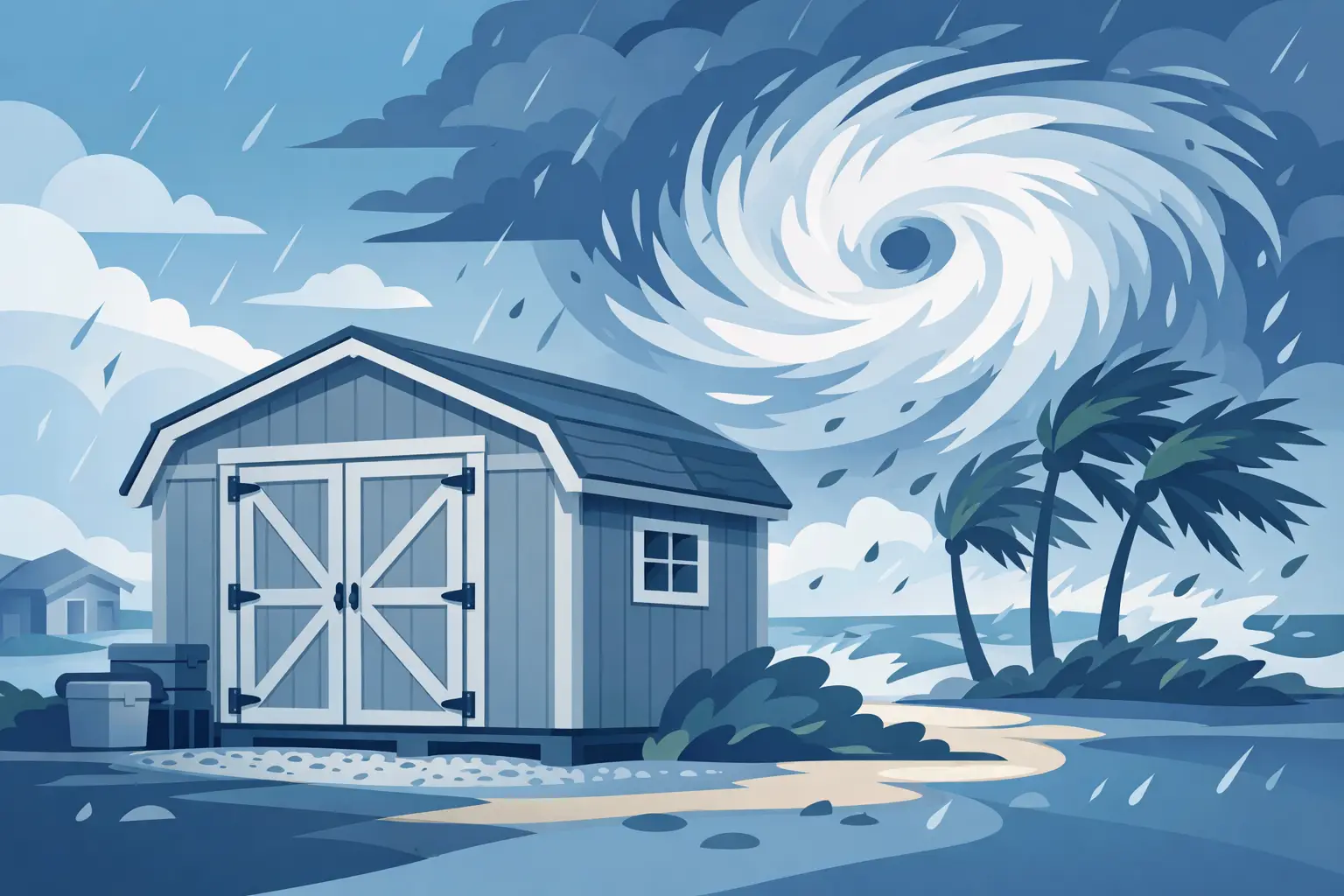
Hurricane Resistant Storage Shed Basics
A storage shed on the Florida Gulf Coast has a tougher job than just holding lawn tools and holiday bins. A true hurricane resistant storage shed has to stand up to wind pressure, wind-driven rain, shifting ground conditions, and the weak points that usually fail first – doors, roof connections, and anchors.
That is where many buyers get tripped up. They assume any shed with heavier siding or a thicker roof is automatically built for storm season. In reality, hurricane resistance comes from the full system working together. If the foundation, framing, fasteners, roof tie-downs, and openings are not designed as one structure, the shed is only as strong as its weakest connection.
What makes a hurricane resistant storage shed different
The biggest difference is not appearance. It is engineering and construction method. A shed built for Florida weather should be planned around load paths, which means wind forces have a continuous route from the roof down through the walls and into the ground. That sounds technical, but the idea is simple. When high winds hit, the structure should transfer that force safely instead of letting one part peel away from another.
That is why the details matter so much. Roof framing needs secure connections. Wall framing needs proper spacing and bracing. Anchoring needs to match the site and soil conditions. Doors need hardware that can resist flexing and blow-in pressure. If one of those parts is undersized or skipped, the whole building becomes more vulnerable.
A lot of delivered prefab sheds struggle here because they are built to be moved first and adapted later. For storm-prone areas, on-site construction often makes more sense because the shed can be built to the actual grade, drainage, setbacks, and wind requirements of the property. That gives you better control over fit, anchoring, and overall structural integrity.
Why on-site construction matters in Florida
Florida is not forgiving when a structure is out of square, poorly anchored, or set on the wrong base. Even a well-built shed can underperform if it is dropped into place on a site that was not properly prepared. That is one reason local property owners often prefer a contractor who builds on-site rather than bringing in a one-size-fits-most unit.
When a shed is built where it will stay, the crew can account for slope, drainage flow, soil conditions, and access constraints before framing begins. That leads to a cleaner install, but more importantly, it reduces the risk of weak points developing because the building had to be forced into place or adjusted after delivery.
For homeowners and small business owners, this also opens the door to better customization. A hurricane resistant storage shed may need a specific roof pitch, a certain door layout, or upgraded structural components based on its use and location. Those are easier decisions to get right when the structure is being built for the property instead of adapted to it.
The structural features that actually matter
A lot of marketing around sheds leans on surface features, but storm durability is usually decided by parts you do not notice at first glance. Framing lumber, connector hardware, roof attachment methods, and anchors are not flashy, but they are doing the real work.
Anchoring and foundation connection
If the shed is not anchored correctly, the rest of the build has limited value. Wind uplift can put tremendous force on a small building, especially when gusts get under roof edges or around door openings. Anchoring should be appropriate for the structure size, site conditions, and expected wind loads.
There is no universal best option here. Some sites call for one anchoring approach, while others need another based on soil and layout. What matters is that the anchoring system is designed as part of the shed, not treated like an afterthought.
Framing and connection points
Good framing is about more than using decent lumber. The spacing, tie-ins, and connection hardware all affect how the shed performs in high winds. A strong wall with weak roof-to-wall connections is still a risk. So is a strong roof sitting on poorly braced framing.
This is where contractor-grade workmanship pays off. Properly installed connectors and consistent framing practices give the building a better chance of staying together under stress.
Roofing and water intrusion control
Wind is only half the problem in a storm. Once water starts getting in, damage adds up fast. Roofing materials, underlayment choices, fastener placement, and edge details all matter. The goal is not just to keep the roof attached, but to reduce the chance of wind-driven rain working its way into the structure.
For many owners, this is the difference between a shed that still functions after a storm and one that turns into a cleanup project. Protecting stored equipment, tools, inventory, or seasonal items means thinking about the roof as a weather system, not just a cover.
Doors, trim, and other weak spots
Doors are often the first thing people notice and one of the first things wind tests. Large door openings can be vulnerable if they are not properly framed and reinforced. Hardware quality matters too. Hinges, latches, tracks, and framing around the opening all need to hold up when pressure changes quickly.
Trim and siding details also deserve attention. These components may not carry the main structural load, but if they are loosely attached or poorly integrated, they can create entry points for water and allow damage to spread.
Choosing the right shed for how you use it
Not every property needs the same kind of storm-ready shed. A small backyard storage building for lawn equipment has different demands than a larger structure used for contractor tools, business supplies, or workshop space. The right design depends on what you need to protect, how often you access it, and how permanent the building is meant to be.
If you are storing expensive equipment, wider doors and interior clearance may matter as much as wall strength. If the shed will double as a work area, ventilation and layout become more important. If the building sits in an exposed location with little wind break, that can change the construction approach too.
This is why a custom plan tends to outperform a standard box. You are not paying for extras you do not need, but you are also not settling for a design that ignores how the building will actually be used.
Code compliance is not a small detail
In a place like Panama City, code compliance is part of the value, not just paperwork. Building codes exist because coastal weather exposes shortcuts quickly. A shed that is built without proper attention to code requirements may cost less upfront, but that savings can disappear fast if the structure fails early, creates insurance headaches, or needs major reinforcement later.
Licensed construction matters here. It gives property owners more confidence that the shed is being built with the right standards in mind, especially when wind resistance and roofing details are critical. It also helps avoid the gray area that can come with unlicensed or loosely assembled structures.
A reputable builder should be able to explain what is being done and why. You should not need a sales pitch full of vague storm-proof claims. Plain answers about framing, anchoring, roofing, and site prep are usually a better sign.
Cost versus long-term value
A hurricane resistant storage shed usually costs more than a light-duty prefab unit, and that is not just because of materials. You are paying for better planning, stronger connections, code-aware construction, and a building that is meant to stay put when conditions turn rough.
That does not mean every upgrade is worth it for every buyer. Some owners need a simple storage solution with solid storm protection. Others need a highly customized structure with more capacity and heavier-duty features. The smart move is to spend where it affects performance, lifespan, and the protection of what is inside.
For many Florida property owners, the real question is not whether the cheapest shed is available. It is whether the building will still be doing its job after years of heat, humidity, rain, and storm season wear.
A dependable shed should make life easier, not add another worry every time a storm tracks toward the Gulf. If you are investing in one, make sure it is built like it belongs here.
Florida Code Compliant Sheds That Last
A shed can look solid in a brochure and still be wrong for a Florida property. That usually shows up later – during permit review, after the first hard storm, or when the building starts holding moisture and wearing out faster than expected. If you are shopping for florida code compliant sheds, the real question is not just size or price. It is whether the structure is designed, built, and installed for Florida conditions from the ground up.
That matters more on the Gulf Coast than almost anywhere else. Heat, humidity, heavy rain, soft or shifting soils, and high wind exposure put real pressure on small buildings. A shed is not just a backyard box. It is a structure that has to work with local codes, the site it sits on, and the way you plan to use it for years.
What makes florida code compliant sheds different
In Florida, code compliance is not a marketing phrase. It affects how a shed is anchored, framed, roofed, and permitted. It can also affect where the building can be placed on your lot, how close it can sit to property lines, and whether extra engineering or site prep is required.
A code compliant shed is built to meet applicable state and local requirements, but that does not mean every shed is built the same way. One property may need a different foundation approach than another. A coastal or exposed site may demand more attention to wind loads than a sheltered inland yard. If the shed will store lawn tools, the design needs may be simple. If it will house business equipment, serve as a workshop, or support electrical service, the planning becomes more detailed.
This is where many buyers get tripped up. They compare sheds by square footage and sticker price, when the bigger difference is often in what is behind the walls and under the floor.
Why on-site construction often makes more sense in Florida
Delivered prefab sheds can work in some cases, but they also come with limits. The building has to be transported, which affects how it is built and how large it can be. Delivery access can be a problem on fenced lots, narrow driveways, soft ground, or properties with trees, grade changes, or tight setbacks.
With on-site construction, the shed can be built to fit the actual property instead of forcing the property to fit the building. That gives more control over footprint, elevation, door placement, roof design, and anchoring. It also makes it easier to account for local code requirements and site-specific conditions before the project gets too far down the road.
For many Florida property owners, that is the smarter path. It allows the structure to be built where it belongs, how it needs to be built, and with fewer compromises tied to transport.
The parts of shed compliance that matter most
Wind resistance and anchoring
Florida weather is the first thing most people think about, and for good reason. High winds are not a rare event here. A shed needs more than a decent-looking exterior. It needs a structural system that is planned for uplift, lateral forces, and secure attachment to its base.
Anchoring is one of the biggest factors. If a shed is not anchored correctly for the site and local code requirements, it may be vulnerable when strong weather rolls in. The roof system matters too. The connection points between roof, wall, and foundation are where quality construction shows up.
Roofing and water management
A shed roof in Florida takes a beating from sun, rain, and wind-driven weather. Code compliance matters, but good judgment matters too. The right roofing materials, proper fastening, and attention to runoff all affect how long the building performs.
A cheap roof can become an expensive problem if it starts leaking into stored equipment, tools, or inventory. Water intrusion also leads to mold, rot, and shortened building life, especially in a humid climate.
Site placement and setbacks
A well-built shed still has to be placed correctly. Local rules may affect setbacks from property lines, easements, septic areas, utility access, and other structures. That is one reason a free on-site consultation is valuable. Paper plans alone do not always show the real constraints of a lot.
Placement also affects drainage and long-term use. A low spot in the yard may seem convenient until standing water collects around the building after every heavy rain.
Intended use
Not every shed is just storage. Some customers need a hobby space, a workshop, lawn equipment building, office overflow, or a place to protect tools for a small business. The more demanding the use, the more the design details matter.
Electrical needs, ventilation, door size, shelving support, insulation options, and floor load capacity can all come into play. A shed built for light seasonal storage is not necessarily the same shed you want for daily work use.
How to judge a builder, not just a building
When people search for florida code compliant sheds, they are often really looking for a contractor they can trust. That is the bigger decision.
Start with licensing and local experience. Florida is not a place to take chances on someone who builds by habit instead of by code. You want a builder who understands permit requirements, wind considerations, roofing standards, and how to adapt a structure to your actual site.
Then look at the construction approach. Ask whether the building is delivered or built on site. Ask how customization is handled. Ask what changes can be made for access, drainage, use, and appearance. A reliable contractor should be able to explain not just what they build, but why they build it that way.
It also helps to pay attention to how the conversation goes. If the builder is focused only on quick pricing, that is a red flag. A better process starts with questions about your property, what you are storing, where the building will sit, and what problems the structure needs to solve.
Custom sheds are not about extras for the sake of extras
There is a difference between custom work and unnecessary upselling. For Florida property owners, customization is often what makes the shed practical and durable.
The right door layout can make equipment easier to move. Matching rooflines and siding can help the shed look like it belongs on the property instead of feeling like an afterthought. Adjusting the size by even a few feet may improve access, storage efficiency, or code placement.
Custom does not always mean complicated. It means the structure is built around real use and local conditions instead of a one-size-fits-all model.
That is especially important if the shed needs to work alongside other exterior projects, like a carport, garage, deck, fence, or covered area. Property owners often get better long-term results when these structures are planned with the full site in mind instead of as separate afterthoughts.
The cost question buyers should ask differently
Everyone wants a fair price. That makes sense. But the cheapest shed is often the most expensive one over time if it leads to permit trouble, storm damage, poor drainage, or replacement work years earlier than expected.
A better question is this: what are you paying for? With a quality shed, you are paying for site-fit construction, code awareness, better materials, stronger installation, and a building that holds up under Florida weather. You are also paying for fewer surprises.
There are trade-offs, of course. A fully custom on-site shed may cost more upfront than a mass-produced delivered unit. But for many homeowners and small business owners, that higher initial investment buys better performance, better fit, and more confidence in the finished structure.
Florida code compliant sheds should solve a problem
The best shed projects start with a practical need. Maybe your garage is overloaded. Maybe your lawn equipment is exposed. Maybe your business needs secure overflow storage, or your property needs a work space that keeps tools dry and organized.
Once that need is clear, the right build becomes easier to define. Size matters, but so do the details that affect daily use: where the doors swing, whether the floor can handle heavy equipment, how the roof sheds water, and how the structure stands up when weather turns rough.
That is the kind of work Tool Time Buildings is built around – solving real property problems with durable outdoor structures that are designed for the site, built on site, and handled by licensed professionals who understand what Florida demands.
If you are comparing shed options, slow the process down just enough to ask better questions. A shed should do more than fill empty space in the yard. It should fit the property, meet the code, hold up to the weather, and give you one less thing to worry about when the next storm season arrives.
Three Types of Home Additions
Brunch with friends, lunch play dates with the neighbors, and long summer nights on the blackstone grilling for the family and friends! Warm weather is here and we are preparing to spend most of our days outside. Make your outdoor space that much better with a home addition. Below are a few ways you can add to your home this summer.
Sunroom
We are called the Sunshine State for a reason, and if you want to get more of that good ole organic vitamin D a sunroom may be the addition for you. The term sunroom is usually defined as a recreational space bridging indoor and outdoor living areas. Sunrooms usually include a significant amount of wall space dedicated to glass. Sit and enjoy the views while staying protected from the outside elements.
- Relaxing in a spa-like retreat
- Reading a good book
- Home office
- Children’s play area
- Cozy space for family gatherings
- Flex-space for multi-activities, games and crafts.
- Exercise room
- Greenspace for plants
Gazebo
Of course, gazebos easily double as a backyard dining room, but they’re also perfect gathering spaces for family board game night or just sitting and chatting with friends while enjoying the fresh air on a perfect summer evening. Benches can be incorporated into your gazebo’s structure to create a type of nook. Your gazebo will also add usable living space to your property, which effectively adds square footage to your home. The more you upgrade your gazebo with lighting, and furniture, the more it becomes a true outdoor space. The more things you add the more likely you will find your family getting together out there to spend time together. Gazebos are also great as poolside retreats! Use the area to cool off during the peak of the summer.
Deck
Imagine sitting out on your deck on a cool summer morning, sipping your coffee while you enjoy the sound of the birds chirping. What more could you want? To some that is all they need to hear and they are ready to build a deck. Decks are completely customizable. You can incorporate a number of different designs, stain colors, structures, materials, and accessories. Some people prefer a simple deck with nothing but a couple of patio chairs and a small table for two. While others prefer to create built-in grilling stations, tables, outdoor sound systems, benches, lounge chairs, and more. Decks are also great for entertaining purposes, space for friends and family to come together. You, your family, and friends playing card games while listening to music and grilling some tasty food, with all the comforts of your home steps away You just cannot beat it. To top it off, decks are very low maintenance and improve your yards overall aesthetic.
How to decorate your Man Cave Shed!
Fridge & Bar
Beer fridges are optimized for your beer, so you’ll want to adjust your fridge closer to 35°F. Beer fridges can be works of art since the glass door on the fridge displays all the awesome craft beers you’ve been collecting.
What is a Man Cave without a bar? The best part about having a bar in your man cave is you decide when it is “open” or “closed,” when “last call” is, and your mixed drink opportunities are endless!
Seating
Seating is an important aspect of your Man Cave! From folding chairs to bar stools, you’ve got to have seating in your man cave. Some of the fancier Man Cave Sheds have genuine leather recliners, but it is totally up to you. Base it on your budget and your theme. If you are going for a laid-back sports bar type of Man Cave, the foldable chairs will do the job. If you’re looking for something more modern with a cigar lounge vibe, a leather recliner or a mahogany throne will match much more!
Decorations
Decorating your Man Cave makes it your own. You can have flags of your favorite sports teams on the wall, a neon beer sign, or even a poster of your favorite movie. The more personalized you make it the more you will want to show it off and spend time hanging out in it!
Games
Any games will make your Man Cave Shed more enjoyable. A dart board can be easy to find, cheap, and simple to install. Ring toss is also a great option. You can install the wall size ring toss or you can purchase a table top, double-sided, ring toss. There are several choices for customizable styles for games in your Man Cave. If you go with a large-sized Man Cave Shed, a pool table or poker table may be what you are looking for.
TV’s & Speakers for music
A TV is a focal point for every Man Cave. It does not have to be a wall-to-wall TV, it can be an old one you already have. You can use your current bedroom TV to put in your Man Cave Shed and upgrade the one in your home. Use the TV in your shed to watch the game, play video games, or enjoy your favorite TV show. If a TV is not in the budget you can always add a Bluetooth® speaker to your Man Cave Shed! Whether it is a portable speaker or one you need to install, music will make your space even more authentic to you! Create a “Man Cave playlist” to use whenever you are spending time in your space.