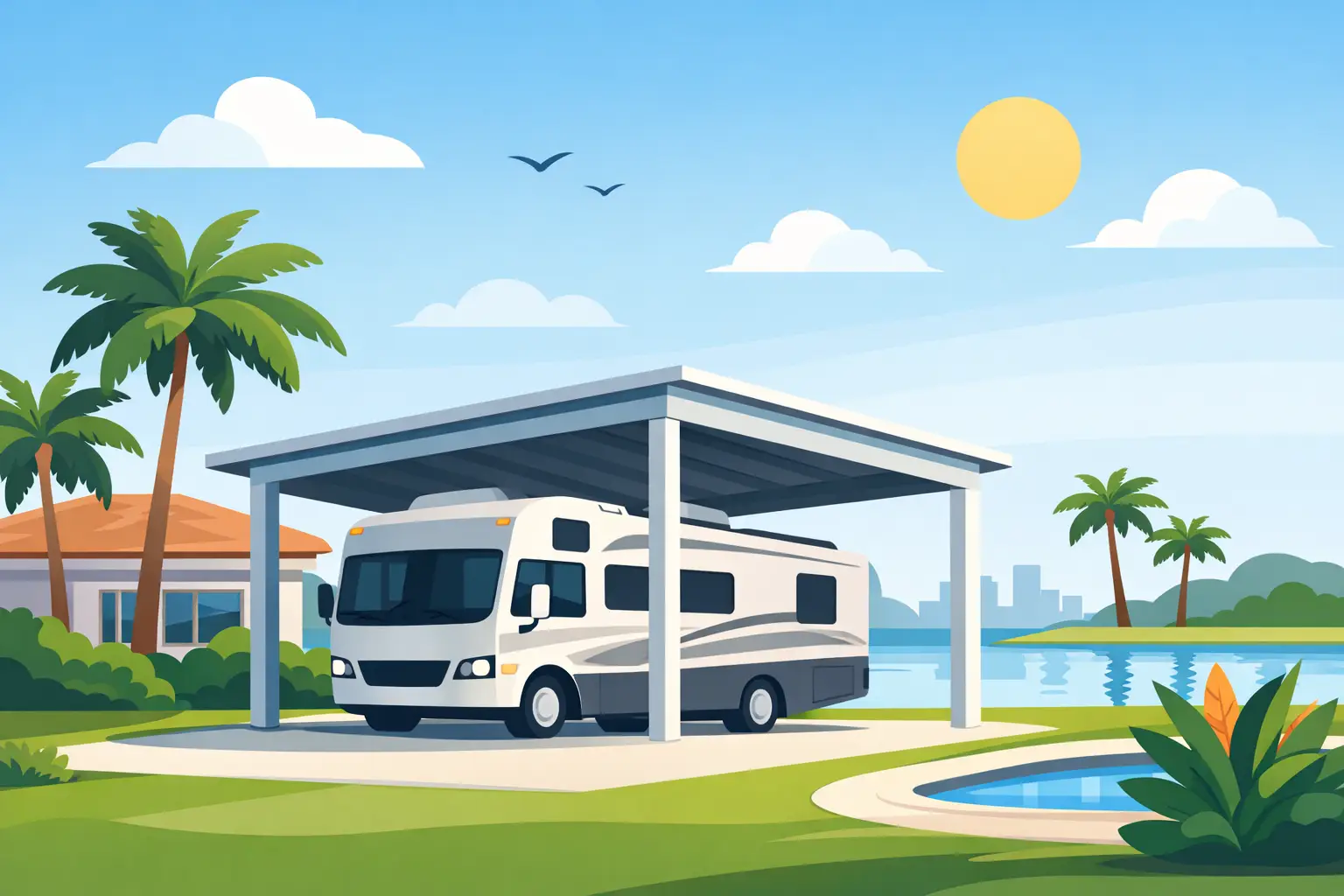
RV Cover Builder Florida Property Owners Trust
A parked RV takes a beating in Florida faster than most owners expect. Sun breaks down sealants, heavy rain finds weak spots, and one storm season can age a rig in a hurry. That is why choosing the right rv cover builder florida property owners can rely on is less about looks and more about protection, engineering, and getting the job built right for your site.
An RV cover is not a generic metal roof dropped onto a piece of land. In this part of Florida, every property comes with its own grade, drainage pattern, access limits, setback rules, and wind exposure. A cover that works fine in another state may not hold up here, and a one-size-fits-all approach usually creates problems later.
What a good RV cover actually needs to do
Most people start with a simple goal – keep the sun and rain off the RV. That matters, but it is only the beginning. A well-built RV cover should protect your investment, make access easier, and fit the way you actually use your property.
For some owners, that means enough clearance for air conditioners, antennas, or upgraded roof accessories. For others, the bigger issue is door access, slide-out space, or room to walk around the unit without squeezing between posts. If you use your RV often, convenience matters almost as much as weather protection. A cover that is technically the right size but awkward to pull into will become a daily frustration.
The best design usually balances three things at once: the dimensions of the RV, the conditions on the property, and the local code requirements. If one of those gets ignored, the project may still get built, but it will not perform the way it should.
Why an rv cover builder florida residents hire should build on-site
This is where a lot of projects go sideways. Some companies treat RV covers like off-the-shelf products. They sell a standard package, deliver materials, and try to make it fit. That can work on a flat, open lot with no surprises, but many Florida properties are not that simple.
Building on-site gives you better control over the finished structure. The cover can be laid out around actual site conditions instead of guessed dimensions. Post placement can match vehicle clearance. Roof lines can be planned with drainage in mind. Height can be adjusted to the RV you own now and the one you may own later.
That matters even more near the Gulf Coast, where wind loads are a real issue and poor placement can create stress points. A builder who works on-site can account for the land, surrounding structures, and the practical way you enter and exit the cover. The result is a structure that feels intentional instead of forced.
Florida weather changes the whole conversation
In many parts of the country, an RV cover is mainly about shade. In Florida, it is also about storm durability. High winds, pounding rain, salt-heavy air in coastal areas, and long stretches of sun all affect what materials and building methods make sense.
That does not mean every owner needs the exact same structure. It means the builder should be asking the right questions. Is the property exposed or sheltered? Is the soil stable? How close are you to the coast? Will water run away from the slab or posts, or collect around them? Do you need a simple roof-only cover, or a stronger setup that ties into a broader site plan?
There are trade-offs. A taller cover gives better clearance but can increase wind exposure if it is not designed correctly. A wider span may reduce post interference, but it can also change material needs and cost. The right answer depends on the RV, the site, and how much protection you want over the long term.
Sizing mistakes cost more than people think
One of the most common problems with RV covers is undersizing. Owners measure the body length and height of the vehicle, then forget mirrors, ladders, roof equipment, turning clearance, and future upgrades. The cover may fit on paper and still be too tight in real use.
A practical design leaves enough room to back in without a white-knuckle maneuver every time. It also considers whether you want to open doors, access storage compartments, or perform maintenance under cover. If the unit is used regularly, extra space is not a luxury. It is part of making the structure functional.
Oversizing has its own trade-offs. Bigger is not always better if the structure starts crowding setbacks, interfering with drainage, or creating unnecessary cost. A dependable builder will help you find the right dimensions, not just sell the biggest roof possible.
Permitting, codes, and licensing are not side issues
A lot of customers do not think much about permits until a problem comes up. Then it becomes the whole project. In Florida, code compliance matters from the beginning, especially for exterior structures that must handle wind and weather.
A qualified builder should understand local permitting, structural requirements, and how to plan a project that fits your property legally and safely. That includes things like setbacks, foundation considerations, attachment details, and load requirements. Skipping those steps may look cheaper at first, but it can create expensive headaches with inspections, insurance, resale, or storm damage later.
This is one reason many property owners prefer working with a licensed contractor instead of chasing the lowest bid. The value is not just in getting the cover built. It is in knowing the job was handled correctly from design through completion.
Materials matter, but workmanship matters more
Customers often ask what material is best, and that is a fair question. Roof panel quality, framing strength, fasteners, and finishes all matter. Still, even solid materials can underperform if the construction is sloppy.
Poor anchoring, weak connections, rushed layout, and careless installation create failures long before the material itself wears out. A dependable RV cover comes from the full package – proper design, contractor-grade materials, and experienced workmanship.
That is especially true in Florida, where small mistakes get exposed fast. Water intrusion, corrosion, uplift stress, and movement do not stay hidden for long. A builder with local experience understands which details deserve extra attention because they have seen what happens when those details are missed.
The best rv cover builder florida customers choose asks better questions
A good consultation should feel practical, not salesy. You want a builder who asks where the RV sits now, how often you move it, whether you plan to upgrade, what the approach path looks like, and what problems you are trying to solve besides simple overhead cover.
Sometimes the answer is a straightforward RV cover. Other times, the smarter move is part of a larger property plan that includes added storage, a nearby shed, a workshop area, or a layout that leaves room for future improvements. That kind of thinking helps you avoid building something that works for one year but boxes you in for the next ten.
This is where a local, service-driven contractor stands apart. Tool Time Buildings builds on-site for the property in front of them, not for an imaginary perfect lot. That approach gives customers a structure that fits better, performs better, and holds up the way it should in Florida conditions.
Long-term value is bigger than the upfront number
Every customer has a budget, and that is real. But when you compare prices, it helps to compare the full value of the project, not just the initial quote. A cheaper cover that is undersized, poorly anchored, or not built to the site can cost more later in repairs, modifications, or replacement.
A well-built RV cover protects the vehicle, reduces wear, and gives you daily convenience. It can also improve the usefulness of your property by creating a dedicated protected space that supports travel, storage, and maintenance. For many owners, that return is what makes the project worthwhile.
The right builder should be honest about what you need, what you do not need, and where spending more actually makes a difference. That kind of straight answer builds trust, and trust matters when you are putting a permanent structure on your land.
If you are planning an RV cover, start with the conditions on your property and the way you use your RV, not with a stock package. A structure built for your site, your vehicle, and Florida weather will serve you better for years to come.