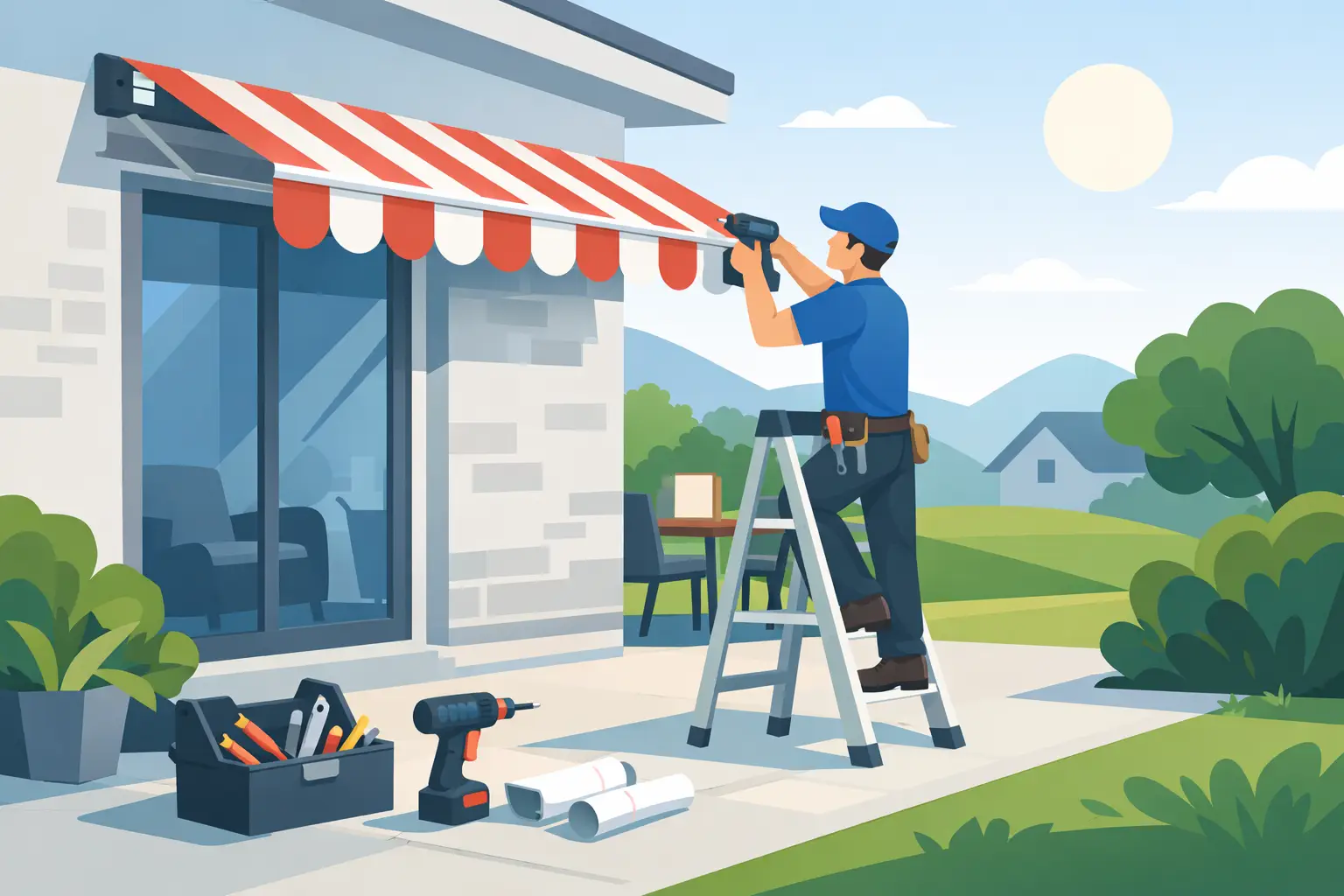
Awning Installation for Homes Done Right
A west-facing patio in Florida can look perfect at 10 a.m. and feel unusable by 3 p.m. That is usually when homeowners start asking about awning installation for homes – not because they want a trendy upgrade, but because they want real shade, better weather protection, and a space they can actually use more often.
If you are considering an awning for your house, the right decision has less to do with color samples and more to do with structure, placement, and how it will hold up in local conditions. In Panama City and across the Florida Panhandle, that matters. Sun exposure is intense, rain comes hard, and wind loads are not something to guess about.
What awning installation for homes should solve
A good awning should fix a specific problem on your property. Sometimes that problem is direct afternoon sun beating through a back door or heating up a patio. Sometimes it is rain pouring over a side entry, or an uncovered deck that sits empty half the year because it is just too hot to enjoy.
The best projects start with that practical question first: what do you need the awning to do? If the answer is shade, the size, extension, and orientation all matter. If the goal is protecting a doorway or outdoor furniture from rain, roof pitch and runoff become more important. If you want the awning to tie into an existing deck, screen room, or carport, then the attachment method and overall design need to work with the structure already on site.
That is one reason custom work usually performs better than a one-size-fits-all product. Homes are different. Roof lines are different. Drainage is different. The way sun hits a house in Lynn Haven is not always the same as a lot with no tree cover near Panama City Beach.
Choosing the right type of home awning
There is no single best awning for every property. It depends on where it is going, how much coverage you need, and how permanent you want the solution to be.
A fixed awning makes sense when you want dependable coverage all the time. These are common over patios, doors, windows, and outdoor living areas where constant shade and rain protection matter more than flexibility. A fixed system usually gives you a sturdier feel, but it also needs to be designed and installed with the structure and wind exposure in mind.
A retractable awning can work well if you want the option to open up the space when weather is nice. That flexibility appeals to some homeowners, but retractable systems also bring moving parts, more maintenance, and different durability considerations. In a storm-prone region, that trade-off needs to be weighed carefully.
Then there is the question of material. Aluminum awnings are popular because they hold up well, require relatively low maintenance, and fit many residential applications. Fabric can look great in the right setting, but in Florida humidity and weather, lifespan and upkeep should be part of the conversation. Wood-framed or more integrated roof-style coverings can also make sense when the awning is part of a larger outdoor structure plan.
Why installation matters more than the awning itself
A lot of homeowners compare awning styles before they think about attachment points, support loads, and code requirements. That is backward. The installation is what decides whether the project lasts.
An awning has to be tied into the home or supporting structure correctly. That means understanding the framing behind the exterior surface, not just fastening into siding, fascia, or trim and hoping for the best. It also means accounting for water management so you do not create leaks where there were none before.
In Northwest Florida, wind resistance is part of the job, not an upgrade. Poorly installed awnings can rack, loosen, leak, or fail early. Even if they stay attached, they can put stress in the wrong places if the load path was not planned properly. Homeowners usually do not see that problem right away. They notice it later when hardware pulls loose, water starts showing up near a door frame, or the awning never feels quite solid.
That is why licensed, experienced installation matters. A contractor used to Florida conditions approaches the project differently than someone treating it like a simple add-on.
Site conditions can change the whole project
Two houses can want the same awning and need completely different builds.
If your home has masonry, the mounting details may be different than they would be on wood framing. If you are installing over a deck, the deck itself may need to be evaluated to see whether it is ready to support the added design. If the area below the awning has poor drainage, the project might need gutter planning or grade adjustments so runoff does not create a new problem.
Sun angle matters too. A shallow awning that looks fine on paper may not block low afternoon sun the way you expect. On the other hand, going too deep can reduce light indoors or change how the front or back of the house feels visually.
This is where an on-site consultation makes a real difference. Measurements are one part of it. The other part is reading the property and seeing what will actually work.
Permits, codes, and storm-conscious construction
Homeowners sometimes assume an awning is too minor to involve permits or code review. Sometimes that is true, sometimes it is not. It depends on the structure, size, location, and how it is being attached.
In Bay County and surrounding areas, code compliance is not paperwork for the sake of paperwork. It is part of building something that can handle weather and protect your investment. When a project is designed with local requirements in mind, you have a better chance of getting a finished result that performs the way it should.
Storm-conscious construction also means thinking beyond the awning itself. How exposed is that side of the home? Is the awning attached near an opening that already gets wind-driven rain? Would a more substantial covered structure serve the property better over time than a lighter awning system?
Sometimes the honest answer is that an awning is the right fit. Other times, a roof extension, screen room, or covered patio structure may be the stronger long-term solution.
When a custom-built awning makes more sense
Many homeowners start by looking at packaged products. That is understandable. They seem straightforward, and the pricing looks simple up front. But packaged awnings are often designed around standard dimensions, generic attachment conditions, and average climates.
That can be a poor match for homes in the Florida Panhandle. When a project is built around the property instead of forced onto it, the result usually fits better, looks better, and performs better. That is especially true when the awning has to line up with an existing deck, cover a nonstandard patio, or work around specific roof lines and doors.
A custom builder can also help you think bigger than the awning by itself. If you already know you may want a screen room later, or if the awning ties into a future carport or outdoor living project, planning that now can save money and rework later.
For homeowners who care about long-term value, that is usually the smarter path. It is the same reason many local property owners choose on-site construction over delivered prefab products. The build is based on the property, not the other way around.
What to ask before hiring for awning installation for homes
Before you move forward, ask how the awning will be attached, what materials are being used, whether permitting is needed, and how the design accounts for wind and water. Ask whether the contractor has real experience building in Florida weather, not just selling products.
You should also ask what happens if the ideal size or placement is not possible with your current structure. A trustworthy contractor will tell you where the limits are. Sometimes a homeowner wants more projection than the wall or framing can reasonably support. Sometimes the best answer is to add posts or shift to a different design. Good guidance is not about saying yes to everything. It is about building something that will hold up.
If financing matters, bring that up early too. A lot of homeowners wait until the end, when it would be better to know their real options before finalizing scope.
A good awning should feel like it belonged there all along
The best awning projects do not look tacked on. They solve a real problem, fit the house, and stand up to the weather they are going to face.
That takes more than ordering a product and bolting it in place. It takes local experience, careful measurements, solid installation, and a builder willing to tell you what makes sense for your property and what does not. For homeowners in Panama City, Panama City Beach, and across Bay County, that kind of practical planning is what turns shade into a lasting improvement instead of a short-term fix.
If you are thinking about adding coverage to a patio, doorway, deck, or outdoor space, start with the structure first. When the build is right, the comfort and curb appeal follow naturally.