Choosing a Screen Room Builder Florida Trusts
A screen room sounds simple until you build one in Florida. The minute you add wind, rain, salt air, insects, code requirements, and the way your house actually sits on the lot, the difference between a basic add-on and a well-built structure gets obvious fast. If you’re looking for a screen room builder Florida property owners can rely on, it helps to know what separates a dependable contractor from someone selling a quick enclosure.
For most homeowners, the goal is straightforward. You want usable outdoor space without the constant battle against mosquitoes, glaring sun, and sudden weather changes. But in the Florida Panhandle, a screen room also has to hold up over time, fit your property correctly, and make sense with the rest of your home.
What a good screen room should actually do
A screen room should give you more than shade and bug protection. It should create a space you use regularly, not just something that looks good for a few months and then starts showing problems. That means the roof tie-in matters, drainage matters, framing matters, and how the room handles wind matters.
A lot of property owners start with the idea that all screen rooms are basically the same. They are not. Some are little more than light-framed enclosures added with minimal planning. Others are built as real, lasting exterior structures designed around the house, the slab or deck, and local weather conditions. That difference affects how long the room lasts, how solid it feels, and whether it adds value or creates headaches later.
If you plan to use the space for outdoor dining, a quiet sitting area, poolside shade, or a protected transition between your backyard and home, the details matter from day one.
Why choosing a screen room builder in Florida is different
Florida is not an easy place to build carelessly. Screen rooms here deal with intense humidity, hard rain, high UV exposure, and storm season every year. In coastal and near-coastal areas, salt air can also speed up wear on the wrong materials.
That is why choosing a screen room builder in Florida should never come down to price alone. A low quote can leave out the things that matter most, like proper anchoring, correct roof design, code compliance, or materials that stand up better in this climate. You may save money at the start and spend more fixing sagging screens, water issues, or structural problems later.
An experienced local contractor knows how these projects perform in real conditions. In places like Panama City, Panama City Beach, and the surrounding Bay County area, you need someone who understands wind exposure, drainage concerns, and how to build for a property that may already have grade changes, older concrete, or site-specific constraints.
Built on-site usually gives you a better result
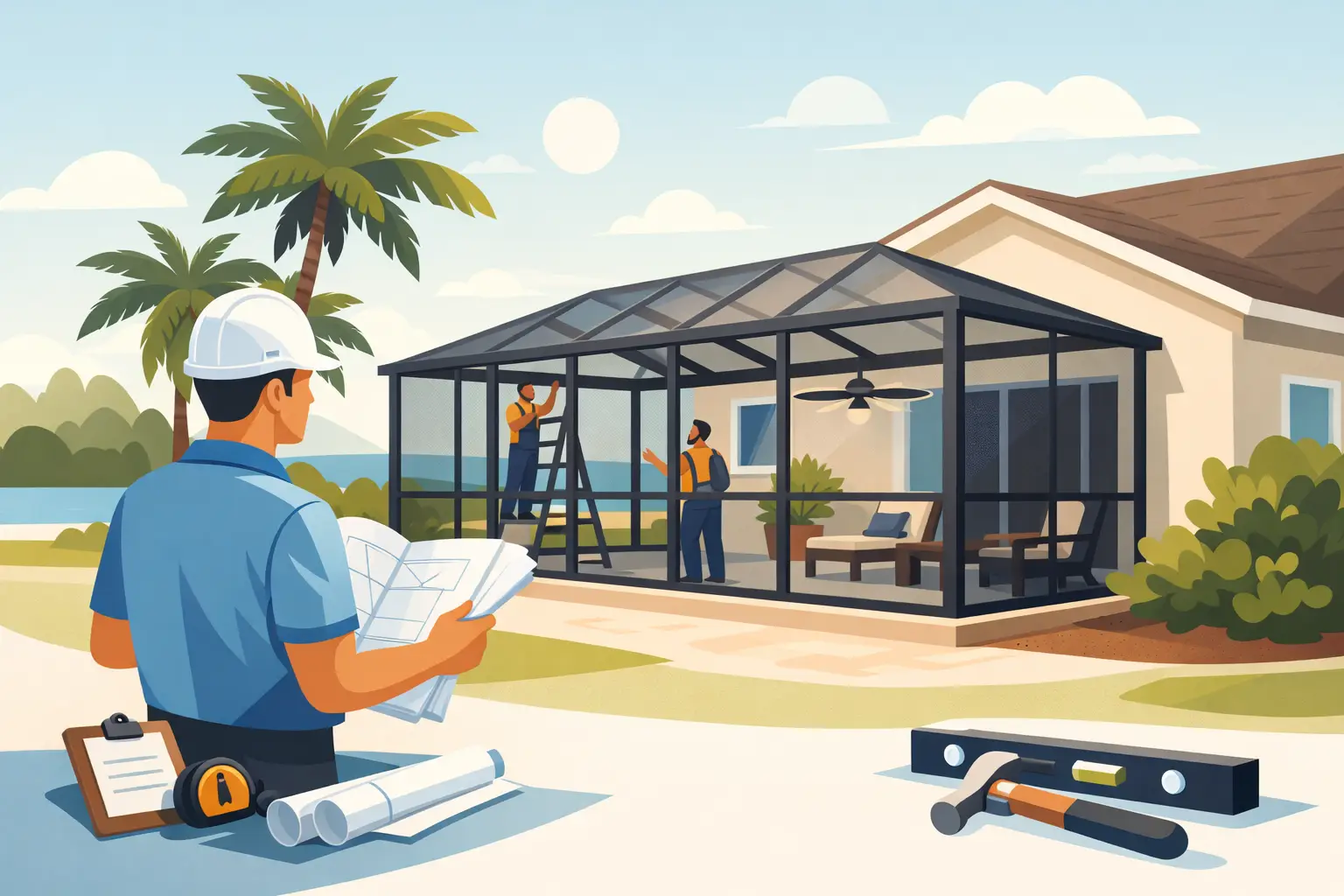
One of the biggest differences between a quality contractor and a one-size-fits-all seller is how the project is built. A screen room built on-site can be tailored to the exact dimensions of your home and yard. That means better fit, cleaner lines, and fewer compromises.
This matters more than many people realize. Homes are rarely as uniform as brochure drawings suggest. Roof lines vary. Existing patios may be slightly out of square. Drainage slopes may need to be worked around. Utility access, doors, windows, and walkways all influence the final layout.
When a contractor builds on-site, there is room to adjust for those realities rather than forcing your property to fit a preplanned package. The result is usually stronger, better looking, and more practical to live with.
What to ask a screen room builder before you hire them
You do not need to be a contractor to ask smart questions. In fact, a good builder should be comfortable answering them clearly.
Start with licensing and experience. If a company is working on exterior structures in Florida, they should be able to explain what licenses apply and how they handle code requirements. Ask whether they build for local wind load standards and whether permits are handled as part of the job.
Then ask how the structure will connect to your home or existing slab. That answer tells you a lot. A professional builder should be able to explain the framing approach, roof integration, anchoring, and any limitations with the current site.
It also helps to ask what customization is available. Not every property owner needs the same thing. Some want an open, airy enclosure for a patio. Others want a more substantial room with insulated roof options, ceiling fans, lighting, wider access, or integrated deck and awning work. A builder who only offers one setup may not be the right fit if your property needs something more specific.
Finally, ask how they account for Florida weather. If the answer stays vague, keep looking.
Design choices that affect long-term value
A screen room is not just a rectangle with mesh. The roof style, framing material, screen type, entry points, and size all shape how useful the space will be.
Roof design is one of the biggest decisions. An insulated roof can make the room more comfortable during hot months, while an open or lighter roof system may cost less up front. Neither is automatically right or wrong. It depends on how often you plan to use the space, how much sun the area gets, and whether comfort or budget is the bigger priority.
Screen choice matters too. Some screen products prioritize visibility. Others are better for insect control or durability. If your property gets a lot of direct sun, nearby tree debris, or heavy use from kids and pets, that should influence the recommendation.
Size is another area where bigger is not always better. A room should fit the house and the way you actually live. If it blocks light into the home or overwhelms the backyard, it can feel like a mistake even if the workmanship is fine. Good design is practical. It solves a problem without creating a new one.
Permits, codes, and storm-minded construction
This is the part many online articles skip, but it matters in real life. A screen room is an exterior structure, and in Florida that means permits, codes, and construction standards are part of the conversation.
A qualified contractor should know what the local jurisdiction requires and build accordingly. That includes structural considerations, attachment methods, and roofing details. If a builder treats permitting like an inconvenience instead of a normal part of the process, that is a warning sign.
Storm-minded construction is not just marketing language in the Panhandle. It is part of building responsibly. With over 20 years serving this region, veteran-owned companies like Tool Time Buildings understand that a structure has to be planned for the weather we actually get, not ideal conditions on paper.
That local experience helps when a site presents challenges. Maybe the existing patio is not suitable as-is. Maybe runoff from the roof needs to be redirected. Maybe the room has to align with a carport, deck, or future addition. Those are the kinds of issues that are easier to solve when the builder has worked on Northwest Florida properties for years.
Cost matters, but value matters more
Every property owner has a budget. That is real, and any honest contractor should respect it. But the best value is not always the lowest number on the estimate.
A properly built screen room may cost more than a stripped-down alternative because it includes stronger materials, better site prep, permit compliance, and a design that fits your home. Those things are not extras. They are often the reason the structure still performs well years later.
At the same time, not every project needs the most upgraded version. Sometimes a straightforward, well-built room is the right answer. Sometimes adding features like improved roofing, integrated lighting, or a larger footprint makes sense because it changes how often the room gets used. It depends on your home, your goals, and how long you plan to stay there.
If financing is available, that can also make it easier to build the room you actually want instead of settling for one that falls short.
Who benefits most from a custom screen room
The best candidates are usually homeowners who already enjoy their outdoor space but want to use it more often and with less hassle. That might mean a back patio that is too exposed to insects, a sitting area that gets too much afternoon sun, or a yard where you want covered space without fully enclosing it into a sunroom.
Small business owners and property owners can benefit too, especially when a screened area improves comfort for customers, tenants, or family use. The key is matching the structure to the site instead of forcing a standard design where it does not belong.
A custom build makes the most sense when you care about fit, appearance, and durability. That is especially true in Florida, where weather finds weak spots quickly.
The right screen room should feel like it was always supposed to be there. If you are talking with a builder who listens to how you use your property, explains the construction clearly, and plans for Florida conditions from the start, you are probably on the right track.